IT skills for fresh graduates have become one of the clearest ways to close the gap between finishing a degree and actually getting hired. You have the qualification. You completed the exams. So why are job applications still going unanswered?
For many graduates in Pakistan, the problem is not necessarily the absence of a degree. It is the absence of practical evidence showing what they can actually do. A degree tells employers what you studied. A demonstrable skill backed by real project work tells them what you can contribute.
Why a Bachelor’s Degree May Not Be Enough for Some Entry-Level IT Roles
A degree is an academic credential. It confirms you completed a programme of study, passed examinations and met the requirements of a university. Most employers expect it. Very few employers are impressed by it alone.
What entry-level roles increasingly require alongside a degree is practical ability. There is a difference between knowing what digital marketing is and being able to run a campaign, read the data and adjust the strategy. There is a difference between knowing what a website is and being able to build one and show it to someone.
A degree provides the foundation. A practical skill provides the evidence. A portfolio of real project work provides the proof. Without that proof, your CV looks the same as thousands of others with the same degree and no way to stand out.
This is not about degrees being worthless. It is about understanding what employers can actually verify during a hiring process and giving them something concrete to assess.
6 Practical IT Skills Fresh Graduates Can Build
These are the six areas that consistently produce real, demonstrable results for fresh graduates. The goal is not to learn all six. Choose the one that fits your background and interests, and build it properly.
1. Artificial Intelligence and Automation
AI tools are now relevant across almost every industry, and fresh graduates who understand how to use them have a visible advantage in most job functions.
This does not mean becoming an AI engineer. It means learning how AI tools work, how to use them for research, content, data analysis and automation, and how to apply them to the type of work you want to do. Prompt engineering, AI-assisted workflows and basic automation are all practical skills that employers value now.
For graduates with a technical background, adding basic Python alongside AI fundamentals opens further doors into data and automation work. Corvit Sahiwal’s Artificial Intelligence course is built for graduates from different degree backgrounds, not only CS or IT graduates.
2. Cybersecurity and Ethical Hacking
Cybersecurity is one of the most specific and in-demand areas in Pakistan’s technology and telecom sectors. Graduates interested in technical, security and infrastructure roles have a clear path here.
The skill involves network security fundamentals, ethical hacking principles, security tools and practical lab work. Completing exercises in a real lab environment and documenting what you did and what you found is itself a portfolio piece.
The CEH certification is issued by EC-Council after candidates pass their examination. Corvit trains students for it; the certification is issued by EC-Council separately. Corvit Sahiwal’s Cybersecurity and Ethical Hacking course covers both practical defense skills and ethical hacking in a structured format.
3. Website Development
Web development gives you something you can show to anyone. A working website, built by you, is more persuasive than any description of coding ability on a CV.
The practical foundation involves HTML, CSS, JavaScript and working with platforms like WordPress. The goal at the graduate level is not to build enterprise software. It is to build something functional, put it online and show it to a potential employer or client.
That project becomes your proof. It also opens a freelancing path on Fiverr and Upwork, which many Pakistani graduates use to build income and experience in parallel while applying for full-time roles. Corvit Sahiwal’s Website Development course teaches practical skills from the ground up for graduates with no prior coding experience.
4. SEO
SEO is a focused, measurable skill that has strong freelance demand and consistent employer demand in digital agencies and marketing teams. Every business with a website needs SEO, and most cannot do it themselves.
The practical skill set involves keyword research, on-page optimization, technical SEO, local SEO, working with Google Search Console and reading analytics data. An SEO audit completed on a real website, documented with findings and recommendations, is a direct portfolio piece.
Corvit Sahiwal’s SEO course covers keyword research, on-page and technical SEO, content optimization and search analytics. Because results are measurable, it is also one of the easier skills to demonstrate with real before-and-after data.
5. Digital Marketing
Digital marketing is one of the most employable skills a fresh graduate in Pakistan can add after graduation. Every sector, from retail to education to healthcare, needs people who can plan and execute digital campaigns.
What employers want is not someone who can define digital marketing. They want someone who can set up a campaign on Google Ads or Meta, manage a content calendar, read performance data and make adjustments based on what the numbers show.
The Pakistan Software Export Board consistently lists digital marketing among the top freelancing services provided by registered Pakistani freelancers, which signals both local and international demand. Corvit Sahiwal’s Digital Marketing course covers campaign setup, social media management, analytics and content strategy with hands-on practice.
6. Graphic Design and Video Editing
Visual content drives almost all digital communication. Social media, branding, advertising, educational content and YouTube all require people who can produce design and video work to a professional standard.
The tools that matter most in the market right now are Adobe Photoshop, Adobe Illustrator, Figma for UI and digital design, and Adobe Premiere Pro or similar tools for video editing. Graduates who can produce polished social media creatives, short-form video content and brand materials have consistent demand across agencies and in-house teams.
The strongest angle for a fresh graduate here is portfolio-first. Produce a range of pieces across different formats and industries before you start applying. Corvit Sahiwal’s Graphic Design and Video Editing course covers both design and video production with a practical, portfolio-oriented approach.
Which Skill Should You Choose After Your Bachelor’s?
The right skill depends on what kind of work you want to do and what you genuinely find interesting, because interest is what keeps you practising long enough to become good at something.
If you are drawn to technology and automation, AI is the most accessible starting point regardless of your degree background. If you are interested in systems, security and technical problem-solving, Cybersecurity makes the most sense. If you want to build things and have the patience for technical learning, Web Development gives you visible proof faster than most other skills.
If research, analytics and content writing appeal to you, SEO is a focused and measurable path. If you enjoy business, brands and advertising and want to work with clients or in marketing teams, Digital Marketing is the most transferable option. If you are drawn to creative and visual work, Graphic Design and Video Editing produces portfolio pieces that speak for themselves.
Do not choose based on which sounds most impressive. Choose based on what you will actually enjoy practising for six to twelve months.
Your Degree and an IT Skill Can Become a Stronger Combination
Adding a practical skill does not mean abandoning what you studied. In many cases, a degree plus the right IT skill creates a combination that is more specific and more valuable than either alone.
A BBA graduate who also knows Digital Marketing can work in marketing functions with business context that a pure digital marketing hire may not have. A B.Com graduate who learns SEO can work in digital agencies while understanding business reporting and analytics from both sides.
An engineering graduate who adds Python and AI can contribute to automation and data projects in a way that separates them from graduates with only one set of skills. A mass communication graduate who learns Video Editing and Digital Marketing can produce and distribute content at a professional level.
A BSCS graduate who goes deeper into Cybersecurity or Web Development has a focused specialization rather than a broad but shallow technical background. An arts or humanities graduate who learns Graphic Design has a career path that uses existing creative strengths with a professional tools foundation.
The combination is more compelling than the degree or the skill in isolation.
What Employers Can Actually See on Your CV
Most fresh graduate CVs list skills in ways that employers cannot verify. “MS Office, Communication, Teamwork, Problem Solving” tells a recruiter almost nothing about what you can actually do.
Here is what the difference looks like in practice.
Instead of writing “SEO skills,” write: Completed a technical SEO audit and keyword research report for a sample e-commerce website. Identified and documented 12 on-page issues with recommended fixes.
Instead of writing “Web development,” write: Built a responsive three-page portfolio website using HTML, CSS and JavaScript. Deployed on GitHub Pages.
Instead of writing “Digital marketing,” write: Created a mock Google Ads campaign plan for a local clothing brand including audience targeting, ad copy and a monthly budget breakdown.
Instead of writing “Graphic design,” write: Produced a brand identity package for a fictional business including logo, color palette, typography and social media creatives.
The difference between those two versions is evidence. Evidence is what moves a CV from the rejected pile to the interview shortlist.
Build a Portfolio Before Applying for Jobs
A portfolio is not a collection of certificates. It is a collection of work. The two are completely different things to an employer.
The process is straightforward. Choose one skill. Complete a structured course and build practical projects during that course. Document each project clearly, including what the goal was, what you did and what the result was. Compile those projects into a portfolio, whether that is a GitHub profile, a PDF, a personal website or a folder of files you can share in a message.
Then update your CV and LinkedIn to reflect what you built. Only then start applying.
A graduate who applies with a CV supported by a visible portfolio of real work is in a different position from one who only has a transcript. That difference is worth the time investment before sending applications.
What Should You Do in the Next 90 Days?
If you finished your degree and have not found a role yet, a focused 90-day plan can change your position significantly.
Days 1 to 30: Choose one skill that matches your interests and background. Enroll in a structured course, whether local or online. Begin learning the fundamentals and complete the initial exercises your course provides. Do not jump between options. Commit to one.
Days 31 to 60: Build practical projects using what you have learned. Aim for two or three pieces of real work you can show. Get feedback from your instructor, a mentor or even peers who are learning the same skill. Revise based on that feedback.
Days 61 to 90: Compile your work into a portfolio. Update your CV to lead with your practical skills and the projects you completed. Update your LinkedIn profile. Begin applying for entry-level roles and internships in your chosen area. Also consider listing a service on Fiverr or Upwork if your skill is freelance-suitable.
This is not a guarantee of employment. It is a realistic way to build something concrete and create a more competitive application in a short period.
IT Courses for Fresh Graduates in Sahiwal
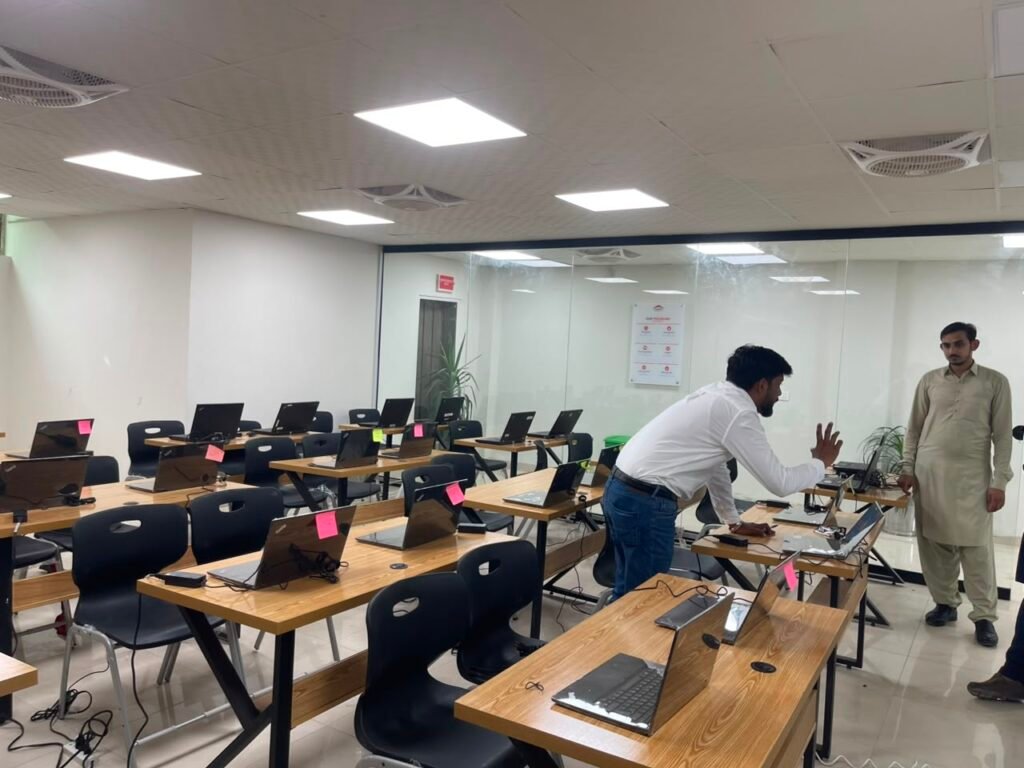
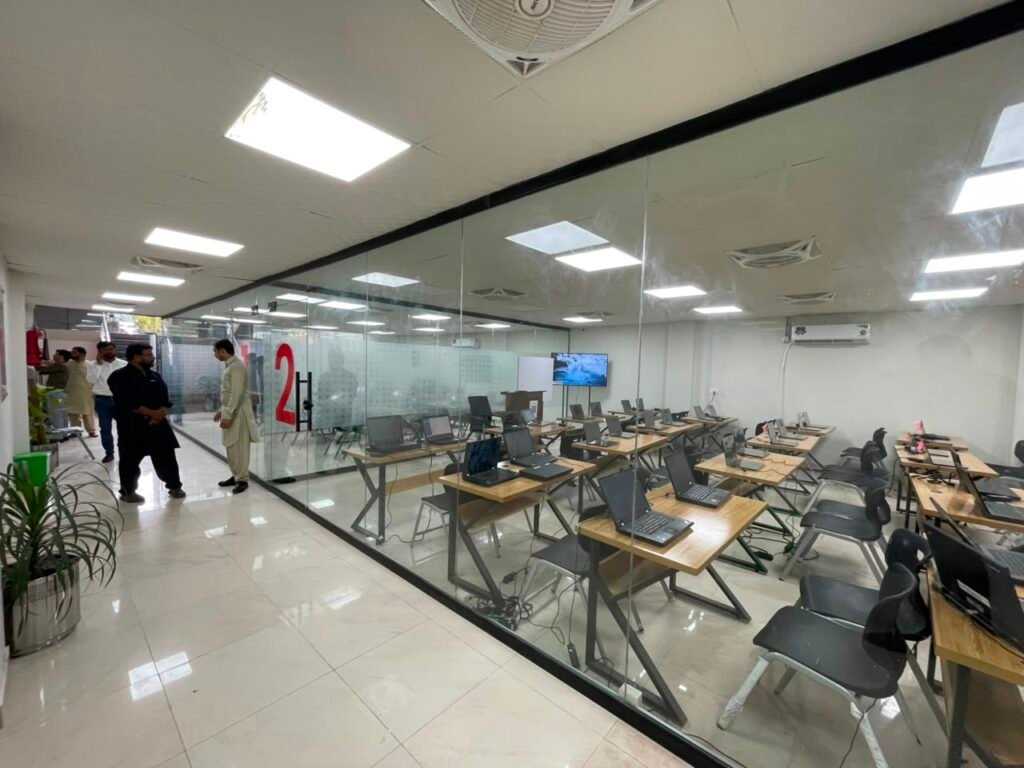
Corvit Sahiwal offers six practical IT training courses at its campus at City Star Plaza, Muhammad Pur Road, Sahiwal. These are paid, structured courses designed for fresh graduates who want to build a demonstrable skill with hands-on instruction.
The current courses are Artificial Intelligence, Cybersecurity and Ethical Hacking (CEH), Website Development, Digital Marketing, SEO and Graphic Design and Video Editing.
These courses are open to graduates from any degree background, not only CS or IT graduates. Batch schedules and timings change between intakes, so confirm the current schedule directly before enrolling. You can reach Corvit Sahiwal on WhatsApp at +92 3273333431 or check the full course list on the website.
Frequently Asked Questions
What IT skills for fresh graduates are most in demand in Pakistan?
IT skills for fresh graduates that consistently show demand in Pakistan include Digital Marketing, SEO, Web Development, AI tools, Cybersecurity and Graphic Design and Video Editing. The most useful choice depends on your degree background, career direction and what type of work you want to do. Choose one, build real projects with it and document your work into a portfolio before applying.
Why can’t I find a job after completing my bachelor’s degree?
A degree is a credential, not proof of practical ability. Many employers at the entry level want to see what you can actually do, not just what you studied. Graduates who build one focused practical skill, complete real projects and present that work in a portfolio are in a significantly stronger position than those who only have a transcript.
Which IT skill is best for a fresh graduate with a non-technical degree?
Digital Marketing, SEO and Graphic Design and Video Editing are the most accessible for graduates from business, arts, commerce or humanities backgrounds. These areas do not require programming experience and produce portfolio-ready work relatively quickly. AI tools are also becoming accessible to non-technical graduates.
Can I get an IT job without a computer science degree?
Yes. Digital Marketing, SEO, Graphic Design and Video Editing and many AI workflows do not require a CS degree. Web Development and Cybersecurity have steeper technical learning curves but are learnable through structured courses regardless of your academic background. What matters more than your degree is the practical work you can show.
Which IT course is best for fresh graduates in Sahiwal?
The best course depends on your background and interests. Corvit Sahiwal offers AI, Cybersecurity and Ethical Hacking, Website Development, Digital Marketing, SEO and Graphic Design and Video Editing. Visit the campus or contact them on WhatsApp at +92 3273333431 to discuss which course suits your degree and goals before enrolling.
How can a fresh graduate become job-ready in 90 days?
Choose one practical skill. Spend the first 30 days learning fundamentals through a structured course. Use days 31 to 60 to build two or three real projects. Use the final 30 days to compile a portfolio, update your CV and LinkedIn and begin applying for entry-level roles and internships. Building one skill with visible output is more effective than 90 days of unfocused job searching.
A degree tells employers where you have been. IT skills for fresh graduates with real projects to show tell employers what you can do right now. That is what changes the outcome of a job search.
Get in touch with Corvit Sahiwal to confirm current batch schedules and find out which course fits your background and career direction.