
The best IT institute in Sahiwal and platforms like Coursera and Udemy are not competing answers to the same question. They are different learning environments with different strengths, and the one that gets you hired is not determined by where you studied. It is determined by what you can actually demonstrate when an employer or client asks “what can you do?” You can spend months on Coursera and still struggle to get an interview. You can attend a classroom course and leave with a certificate but no useful portfolio. This article gives you an honest comparison of both so you can make the right choice for your specific situation.
Can an Online Course Get You a Job?
Yes, an online course can contribute meaningfully toward getting a job, but only when it produces real, demonstrable skill and portfolio work alongside the certificate. The certificate alone rarely moves a hiring manager. The projects, the portfolio, and the demonstrated ability to apply the skill in a real context are what create interview opportunities.
Coursera offers career-oriented Professional Certificates from companies including Google, IBM, and Microsoft, with many programs including hands-on projects and career resources built into the course structure. Udemy offers courses across development, cybersecurity, cloud, design, and other skill areas, including certification preparation courses with high production quality and specific tool coverage.
The honest caveat is that both platforms are self-paced, which means completion rates for self-directed learners are notoriously low. A student who finishes a Coursera Professional Certificate with three documented projects is in a genuinely competitive position. A student who starts the same course, watches 30 percent of the videos, and abandons it when life gets busy has gained very little regardless of what was spent on the subscription.
Can an IT Institute Get You a Job?
Yes, an IT institute course contributes toward getting a job by the same mechanism: real, demonstrable skill and portfolio work produced during structured training. The structured schedule, instructor feedback, and peer accountability of a classroom environment tend to produce higher completion rates and stronger early-stage portfolios than self-paced online alternatives for most beginners.
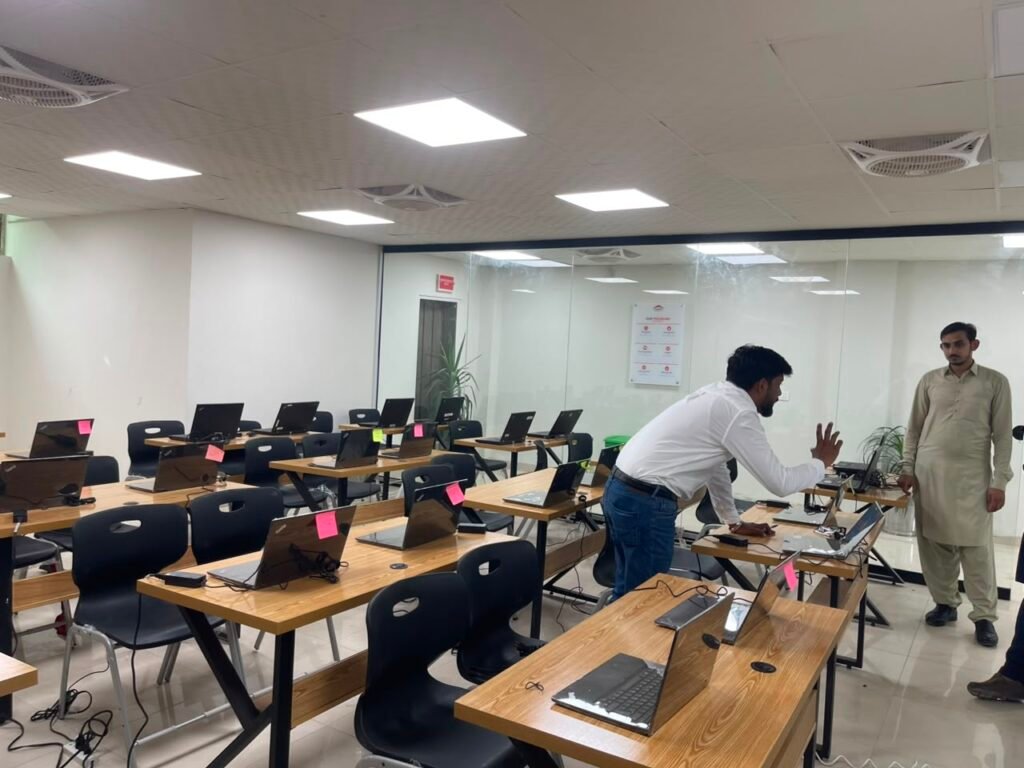
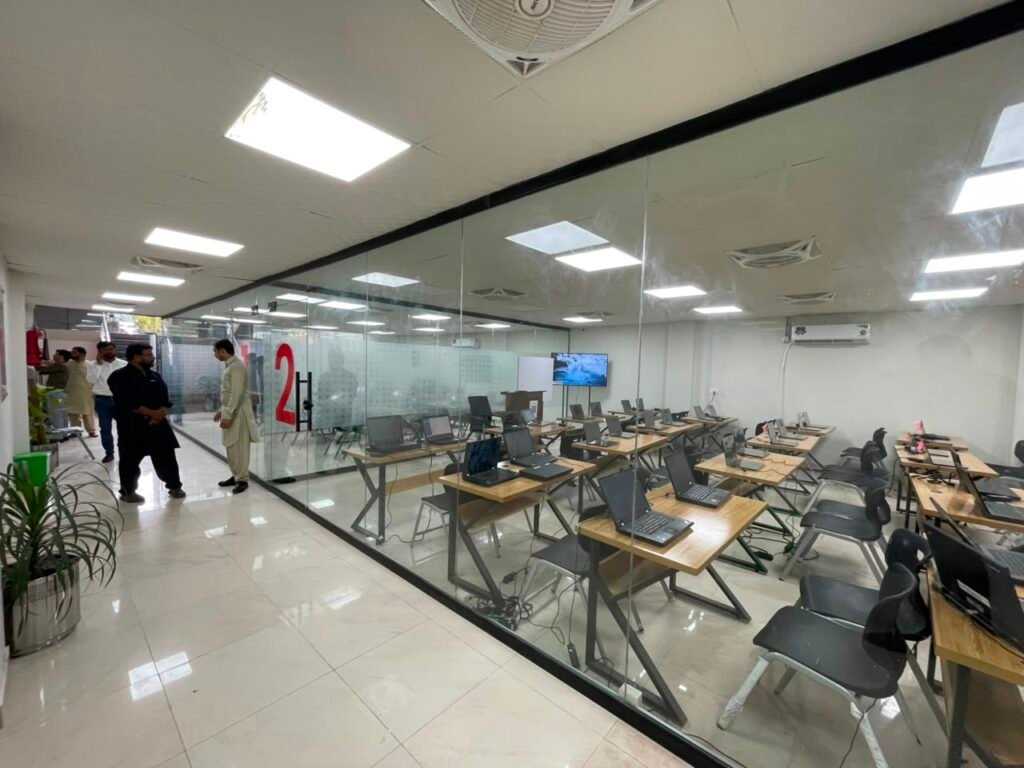
Corvit Sahiwal at City Star Plaza, Muhammad Pur Road, Sahiwal, specifically positions its six current courses around practical, project-based learning that produces portfolio-ready output rather than only completed course hours. Students in every course work with real tools, complete guided exercises, and produce finished project work they can show to employers and clients.
The honest caveat applies here too: an IT institute course that delivers mainly passive lectures without real project output does not get anyone hired either, regardless of the certificate it issues. The training model matters as much as whether the course is online or classroom-based.
Classroom Training vs Online Learning: What Is the Real Difference?
The real difference between classroom training and online learning is not the certificate at the end. It is the accountability structure, the access to instructor feedback, and the social environment during the learning process.
Classroom training gives students a fixed schedule that functions as external accountability. When a session is at 10 AM on Saturday, a student who shows up is significantly more likely to engage than one who tells themselves they will get to the online module “this weekend.” Instructor feedback catches mistakes in real time, before they become ingrained habits. The classroom environment creates informal learning through watching classmates struggle with the same problem and seeing how it gets resolved.
Online learning gives students maximum flexibility and access to globally produced content from companies and instructors they could never access locally. The trade-off is that the entire accountability structure moves inside the student’s own discipline and motivation, which is a harder starting position for most beginners than most online course marketing acknowledges.
Coursera vs Udemy: Which Is Better for IT Skills?
Coursera and Udemy serve different learning purposes and are worth distinguishing honestly before recommending either as a supplement to classroom training.
Coursera’s strongest offering for career-focused learning is its Professional Certificate programs, which are structured around job-readiness rather than just topic coverage. Google’s IT Support, IBM’s Data Science, and similar programs include hands-on labs, graded projects, and career resources. The quality is consistently high, the projects are structured to produce portfolio evidence, and some programs include employer connections. The cost is subscription-based, which incentivizes completion but also means the investment is ongoing.
Udemy’s strongest offering is breadth and specificity. If a student needs to learn a specific tool, a specific framework, or prepare for a specific certification exam, Udemy almost certainly has a course for it, often at a low one-time purchase price. The quality varies significantly between courses, but user reviews and ratings make filtering for quality straightforward. Udemy courses are generally better for targeted skill-building than for structured career preparation.
Neither platform replaces structured, instructor-guided practical training for most beginners. Both are excellent as supplements for deepening specific skills after the fundamentals are established.
Why Hands-On Projects Matter for Getting Hired
Hands-on projects matter more than certificates for most IT hiring decisions because employers and clients are evaluating whether a candidate can do the work, not whether they attended a course.
A graphic design employer who sees three finished logo designs, a real social media content set, and a short promotional video in a portfolio evaluates that portfolio as direct evidence of ability. A cybersecurity employer who sees documented lab exercises, a vulnerability assessment report, and CEH certification evaluates those as evidence of real hands-on experience. A web development client who can look at a functioning website built by the candidate evaluates that more heavily than any certificate.
The common mistake beginners make is completing a course without producing portfolio-quality work during it. Every exercise, project brief, and lab session during a course is an opportunity to produce something show-able. Students who treat course work as disposable practice and students who treat it as permanent portfolio material have very different outcomes six months after graduation, even when they completed the same course.
Portfolio vs Certificate: What Do Employers Actually Look At?
Both matter, but in different order and for different reasons.
A certificate signals that a student completed a recognized course or passed a recognized exam. For roles with formal credential requirements, particularly technical or security roles, the right certificate is a gate that must be passed before the portfolio is even considered.
For most entry-level IT roles and all freelance work, the portfolio is the primary evaluation tool and the certificate is supporting evidence. A Fiverr client browsing graphic designers looks at the portfolio before the profile bio. A startup hiring its first digital marketer asks to see past campaigns before asking about certifications. An SEO agency assessing junior candidates asks for an audit example or a ranking case study.
The practical advice is to build both in parallel during training rather than treating certification and portfolio building as sequential. A student who finishes a course with both a recognized certificate and two to three strong portfolio pieces is in a significantly stronger position than one who has either in isolation.
Which Option Is Better for Beginners?
For most beginners, structured classroom training is the stronger starting point. The external accountability, real-time instructor feedback, and fixed schedule reduce the two most common beginner failure modes: abandoning the course before completing it, and completing it without building practical skill due to lack of guided practice.
A beginner who genuinely struggles with self-motivation, who has never studied a technical skill independently, or who needs live feedback to understand whether they are doing something correctly will consistently perform better in a structured classroom environment than in a self-paced online course, even if the online course covers the same content.
Corvit Sahiwal’s courses at City Star Plaza, Muhammad Pur Road, Sahiwal are specifically built for beginners with no prior background, starting from fundamentals and progressing through tool practice into real project work. Contact the campus directly on WhatsApp at +92 3273333431 to confirm current beginner batch availability.
Which Option Is Better for Self-Directed Learners?
For students who can consistently self-direct and have a strong track record of completing independent projects, online platforms offer advantages that classroom training cannot match: global instructor expertise, specific tool coverage, and the flexibility to build a personalized learning path across multiple platforms.
A self-directed learner who completes a Coursera Google Professional Certificate, supplements it with targeted Udemy courses on specific tools, and applies everything to three real projects during the learning process can produce an outcome competitive with or better than structured classroom training. The condition is genuine self-direction, which is rarer than most students estimate about themselves before they start.
Which Is Better for Students Who Need Instructor Support?
For students who benefit most from asking questions in real time and having their work reviewed by a live instructor, classroom training is clearly better. No online platform replicates the experience of a trainer watching you work through a problem, identifying where the reasoning went wrong, and correcting it in the moment.
This matters most in technical subjects like cybersecurity, web development, and AI, where subtle conceptual errors early in the learning process compound into significant skill gaps later. An instructor who catches a fundamental misunderstanding in week two saves a student months of practicing the wrong approach. An online forum response or a video replay cannot catch the same mistake with the same speed or accuracy.
Can You Combine an IT Institute With Online Courses?
Yes, and this is the strongest approach for most students who want to maximize their career readiness.
The combination that works best is: use structured classroom training to build the foundational skill, develop guided project work, and establish strong fundamentals; then use Coursera or Udemy to deepen specific tool knowledge, prepare for vendor certification exams, or add a complementary skill on a flexible schedule.
For example, a Corvit Sahiwal Digital Marketing student who completes their course with a solid practical foundation can then deepen their Google Ads knowledge through a Coursera Google Professional Certificate or supplement their SEO toolkit using a specific Udemy SEO course. The classroom training gives the foundation and the portfolio. The online courses give the specialization depth and potentially an additional recognized credential.
Pakistan’s National Vocational and Technical Training Commission also provides free training options that can complement paid institute training for eligible students, making a layered approach financially accessible to more students than a purely private training path.
What Should You Check Before Choosing an IT Course in Sahiwal?
Six questions give a prospective student the information needed to evaluate any course, whether it is at a local institute or on an online platform.
Does the course produce real, finished project work during the learning period rather than only at the end? Is the instructor accessible for real-time feedback on errors and questions? Is the curriculum current and aligned with tools employers and clients actually use in 2026? Is the schedule structured enough to hold a beginner accountable, or entirely self-paced? Does the course lead toward a recognized certificate or certification? And what does a graduate leave with that they can show to an employer or client on their first application?
These questions apply equally to Corvit Sahiwal, Coursera, and Udemy. The answers determine the value of the course far more than the platform name or the fee.
Best Learning Path for Getting an IT Job in Pakistan
The most effective learning path for getting an IT job or freelancing income in Pakistan in 2026 is not “choose one platform and commit.” It is a structured sequence that combines the accountability and guided practice of classroom training with the specialization depth and flexibility of online resources.
Start with a structured, project-based classroom course in your chosen skill area. Use the sessions to build foundational skill, receive instructor feedback, and produce at least two to three portfolio pieces during training. Simultaneously or immediately afterward, use Coursera or Udemy to deepen specific tool knowledge or prepare for a relevant vendor certification. Combine the strongest portfolio work from both into a unified, clearly presented portfolio. Apply for entry-level roles and freelance projects using that portfolio as the primary evidence, supported by the certificates as credibility signals.
This sequence produces the combination that actually moves hiring decisions: demonstrated skill, real project evidence, and recognized credentials, all working together rather than any one of them in isolation.
Explore Corvit Sahiwal’s current courses to find the structured starting point that fits your goal, and get in touch to confirm current batch schedules before deciding.
Frequently Asked Questions
Is Corvit Sahiwal better than Coursera for learning IT?
They serve different purposes. Corvit Sahiwal offers structured, instructor-guided classroom training with live feedback and local accountability, which suits beginners who need external structure. Coursera offers flexible, self-paced career certificates with global instructor quality. Both can produce strong outcomes; the right choice depends on your learning style and self-discipline.
Can I get a job with only a Udemy certificate?
A Udemy certificate alone is rarely sufficient. What matters is whether the Udemy course produced real project work and practical skill you can demonstrate. A Udemy certificate supported by a strong portfolio and relevant hands-on projects is significantly more compelling than a certificate without any of those.
Which is better for beginners: an IT institute or online courses?
For most beginners, a structured classroom institute is the stronger starting point because the external accountability, instructor feedback, and fixed schedule reduce the two most common beginner failure modes: abandoning the course and completing it without building practical skill.
How much do Coursera and Udemy courses cost compared to Corvit Sahiwal?
Udemy courses are typically low one-time purchases. Coursera operates on a monthly subscription or per-certificate fee. Corvit Sahiwal’s fees are paid directly and should be confirmed with the institute since they change between intakes. Confirm fees directly before comparing, since the total investment varies significantly by course and format.
Can I do both an IT institute course and online courses at the same time?
Yes. The most effective approach for many students is to use classroom training for the foundational skill and guided project work, then supplement with Coursera or Udemy for specific tool depth or vendor certification preparation. Both can contribute to the same portfolio and job search.
What is the best IT institute in Sahiwal for getting a job?
The best IT institute in Sahiwal for getting a job is the one that delivers hands-on, project-based training in a skill that matches your career goal, with instructor feedback and a structured schedule. Corvit Sahiwal offers six practical courses covering AI, Digital Marketing, SEO, Web Development, Graphic Design and Video Editing, and Cybersecurity, built around exactly this model.
Final Thoughts
The best IT institute in Sahiwal and platforms like Coursera and Udemy are not competing choices. They are complementary tools in a learning strategy built around one goal: producing the skill, portfolio, and credentials that employers and clients actually evaluate. Start with structure. Build real projects. Add specialization depth online. Apply with a portfolio that demonstrates what you can do. Get in touch with Corvit Sahiwal to find the right structured starting point for your goal.