CEH training in Sahiwal at Corvit Sahiwal covers the concepts, tools, lab practice, and certification pathway that EC-Council’s Certified Ethical Hacker framework expects, delivered locally without requiring students to travel to Lahore or Islamabad. The relevant question is never which city the classroom is in. It is whether the training covers the right knowledge areas, gives students real hands-on tool experience, and prepares them for the CEH certification exam through a recognized pathway. This article answers that question directly, comparing what international CEH training expects with what Corvit Sahiwal’s cybersecurity course covers.
What Are CEH Training Standards?
CEH training standards are defined by EC-Council, the organization that administers the Certified Ethical Hacker certification globally. EC-Council sets the knowledge domains, lab competencies, and practical skills that CEH-level training is expected to cover, regardless of where in the world the training is delivered.
The CEH framework covers 20 knowledge domains including reconnaissance and footprinting, network scanning and enumeration, vulnerability analysis, system hacking, social engineering, session hijacking, web application security, wireless security, mobile security, cloud computing security, IoT security, and cryptography. A CEH-aligned course is one that teaches students to understand, identify, and address vulnerabilities across these domains using the tools and methodology that real-world ethical hackers apply.
Corvit Systems is recognized as an EC-Council training partner through its national network, which means its CEH training is aligned with EC-Council’s own curriculum framework rather than being an independently assembled course. Full details on Corvit Systems’ CEH training and EC-Council partnership are on Corvit Systems’ ethical hacking training page.
What Do Students Learn in CEH Training?
CEH training teaches students to think like an attacker in order to identify and fix vulnerabilities before real attackers exploit them. The learning progression moves through several structured phases that mirror how a real penetration test is conducted.
Reconnaissance covers how to gather information about a target system or network using publicly available sources, network tools, and social engineering techniques before any direct attack phase begins.
Scanning and enumeration covers how to identify active hosts, open ports, running services, and system configurations using tools like Nmap and Wireshark.
Vulnerability analysis and exploitation covers how to identify security weaknesses in systems and understand how they can be exploited using frameworks like Metasploit.
Web application security covers how to identify and test for common vulnerabilities listed in frameworks like the OWASP Top 10, including SQL injection, cross-site scripting, and authentication weaknesses.
Wireless, mobile, cloud, and IoT security each cover the attack surfaces and defense strategies relevant to those specific environments.
The full CEH course outline, including all 20 domains as structured by Corvit Systems for its CEH program, is available on Corvit’s official CEH course outline page.
What Cybersecurity Labs Does Corvit Sahiwal Offer?
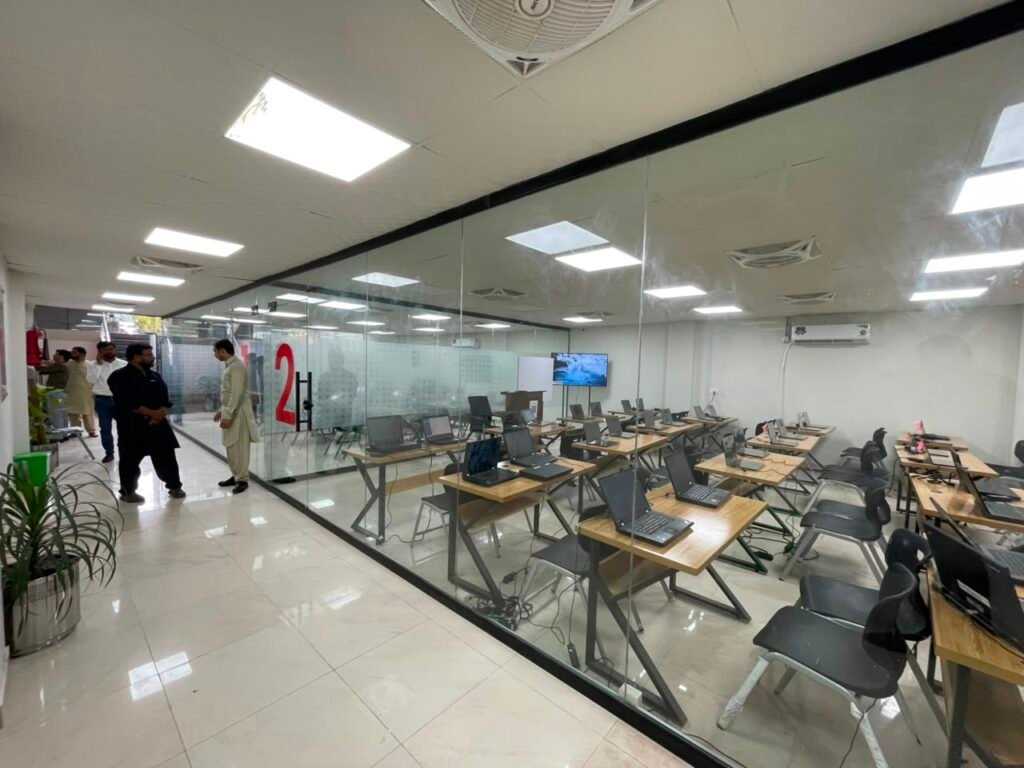
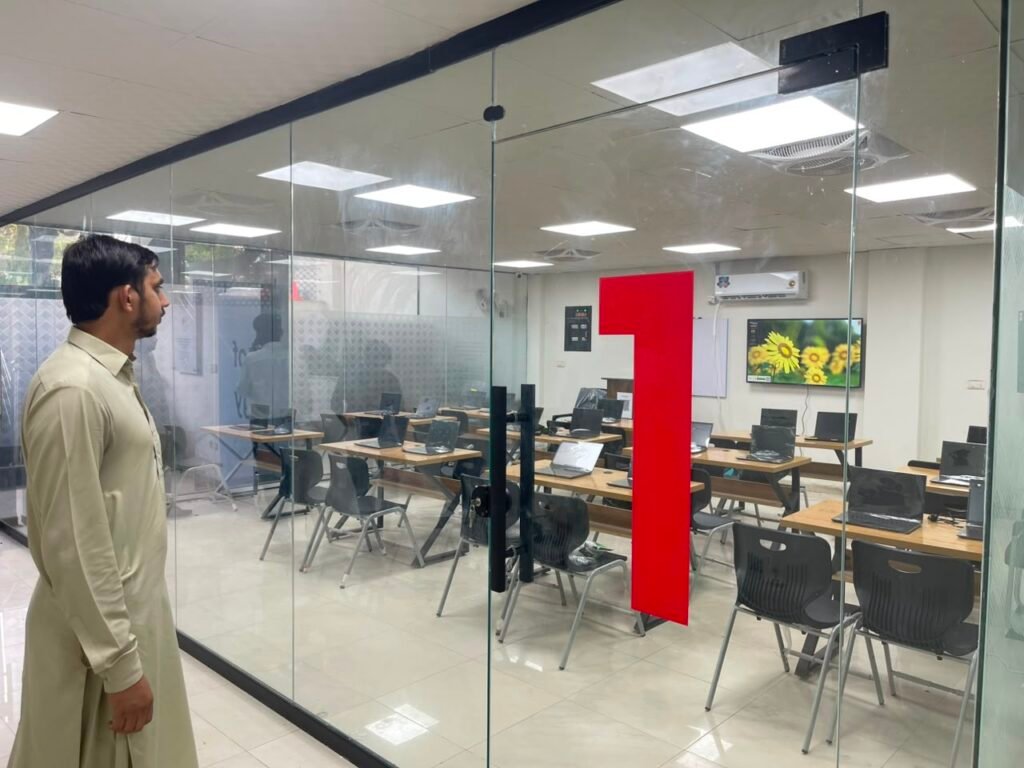
Corvit Sahiwal’s Cybersecurity and Ethical Hacking course includes hands-on lab sessions using controlled environments where students practice with real security tools rather than only studying their function from slides or videos. The lab environment uses virtualization platforms that allow students to simulate attack and defense scenarios without affecting real systems.
Students work with Kali Linux as the primary operating environment, since it comes pre-loaded with the security tools used throughout the CEH curriculum. Lab sessions include guided exercises covering network scanning, vulnerability identification, and basic exploitation workflows in a controlled, legally authorized environment.
The lab-based approach means students interact with the actual tools they will encounter in real-world ethical hacking work, which produces significantly stronger practical retention than a theory-only course. Full details on the course structure and lab content are on Corvit Sahiwal’s Cybersecurity and Ethical Hacking course page.
Which Ethical Hacking Tools Do Students Practice With?
Four tools appear most consistently in CEH training curricula and are the ones students at Corvit Sahiwal work with during lab sessions.
Kali Linux is the base operating system for ethical hacking work, containing hundreds of pre-installed security tools and providing the environment in which most real-world penetration testing is conducted.
Wireshark is a network packet analyzer used to capture and inspect network traffic in real time, which is essential for understanding what data is moving across a network and identifying abnormal patterns.
Nmap is the standard network scanning tool used in the reconnaissance and enumeration phases of a penetration test to identify active hosts, open ports, and running services.
Metasploit is an exploit framework used to test how systems respond to known vulnerabilities in a controlled, authorized environment, giving students direct experience with how actual attacks are structured and executed.
EC-Council’s official CEH certification page provides the authoritative reference for the full tool and skill set the CEH exam tests against.
How Hands-On Labs Compare With Theory-Based Training
The difference between a hands-on lab course and a theory-based cybersecurity course is the difference between knowing what a tool does and knowing how to use it when a real engagement puts it in front of you.
Theory training teaches students to describe concepts, explain attack types, and recognize vulnerability categories. These are necessary foundations. A student who does not understand what a SQL injection attack is cannot execute or defend against one effectively.
Practical lab training takes that foundation and applies it. A student who has run Nmap against a practice target, captured and analyzed Wireshark packet data, and worked through a Metasploit exercise in a controlled environment has built the muscle memory and problem-solving instinct that theory alone cannot produce.
The EC-Council CEH exam itself includes a practical component in its updated versions, which means students who have only studied theory without lab practice are at a genuine disadvantage during the examination, not just in later employment.
Does Corvit Sahiwal’s Course Prepare Students for CEH?
Yes. Corvit Sahiwal’s Cybersecurity and Ethical Hacking course is structured as a CEH preparation pathway, covering the knowledge domains and practical tool experience that the EC-Council CEH framework requires. Corvit Systems’ recognition as an EC-Council training partner means the curriculum is aligned with EC-Council’s own standards rather than a locally assembled alternative.
The honest framing worth maintaining is this: the course prepares students for the CEH exam through structured, tool-based training aligned with EC-Council’s curriculum. Passing the CEH exam and receiving the CEH certification is a separate step that the student completes directly with EC-Council after the training. Completing the Corvit Sahiwal course and passing the EC-Council exam are both required for the full CEH credential. Confirm current exam registration and voucher arrangements directly with Corvit Sahiwal when enrolling.
CEH Certification vs CEH Training: What Is the Difference?
CEH training is the educational preparation: the course, the lab sessions, the tool practice, and the knowledge domains. CEH certification is the credential issued by EC-Council after a candidate passes EC-Council’s independently administered examination.
Training prepares you. The exam certifies you. Both steps are required for the CEH credential, and they are distinct. A student who completes a CEH training course but does not sit the EC-Council exam does not hold a CEH certification. A student who attempts the EC-Council exam without proper training is unlikely to pass it.
Corvit Sahiwal’s role in this sequence is the training component. EC-Council’s role is the examination and certification. Students planning their timeline should account for both and confirm current exam availability and registration process directly with Corvit Sahiwal.
What Practical Skills Should a CEH Student Develop?
Eight practical skills consistently distinguish a genuinely trained ethical hacker from someone who has only completed a theoretical course.
Eight practical skills separate a genuinely trained ethical hacker from someone who only completed a theoretical course. The ability to conduct network reconnaissance without detection. To scan and enumerate a target network and interpret Nmap output accurately. To identify real vulnerabilities and understand their severity. To use Metasploit for controlled exploitation testing. To analyze Wireshark traffic and spot abnormal patterns. To document findings in a format clients and security teams can act on. To conduct web application security testing against common vulnerability categories. And to operate strictly within an authorized engagement scope.
These are the skills that make a CEH-trained professional useful on the job or in a freelance security engagement, not just on a certification exam.
Can Sahiwal Students Get International-Level Cybersecurity Training Locally?
Yes, and the distinction worth making is that international-level training is defined by the curriculum, tools, and certification pathway, not by the location of the classroom.
A student in Sahiwal who trains on the same CEH-aligned curriculum, uses the same tools (Kali Linux, Wireshark, Nmap, Metasploit), works through the same lab exercise categories, and pursues the same EC-Council certification examination as a student in London, Dubai, or Lahore is receiving training of the same standard. The EC-Council certification exam is the same exam regardless of where training was received.
What Sahiwal students gain by training locally is the elimination of travel cost, commute time, and the logistical burden of studying in a different city. What they receive is training aligned with the same international framework. The two are not in conflict.
What Should You Check Before Joining a Cybersecurity Lab?
Ten specific questions give a prospective cybersecurity student the information needed to evaluate any lab-based training program honestly, at Corvit Sahiwal or anywhere else.
Is there a controlled lab environment where students can practice without affecting real systems? Can students actually operate the tools themselves, or do they primarily watch instructor demonstrations? Are simulated attack and defense scenarios part of the course structure? Do students perform vulnerability assessments against practice targets? Is Kali Linux included and used as the primary working environment? Are networking fundamentals taught before security-specific content? Is the curriculum updated to reflect current tools and attack methodologies? Is the training pathway aligned with a recognized certification such as CEH? Are labs instructor-guided with real-time feedback? What documentation do students produce during lab sessions that can serve as portfolio evidence?
Is CEH Enough to Start a Cybersecurity Career?
CEH is the recognized starting point for a cybersecurity career, not the finishing line. Understanding this distinction before enrolling matters for setting realistic expectations.
The most realistic entry-level career target for a CEH-prepared beginner is a SOC Analyst role, which involves monitoring, identifying, and escalating security incidents. This role values the foundational knowledge and tool familiarity that CEH training develops.
Professional penetration testing, where an ethical hacker actively tests client systems for vulnerabilities, typically requires substantially more hands-on experience than a single training course provides. Most working penetration testers have months or years of additional lab practice, Capture the Flag competition experience, and documented security work beyond their initial certification.
The honest career progression is: cybersecurity fundamentals through structured training, hands-on labs and tool practice, portfolio documentation from lab sessions, CEH certification through EC-Council examination, continued practice and additional certifications over time, and then entry-level security roles that build toward more advanced specialization.
Frequently Asked Questions
What is CEH training in Sahiwal?
CEH training in Sahiwal at Corvit Sahiwal covers the EC-Council Certified Ethical Hacker curriculum including reconnaissance, network scanning, vulnerability analysis, ethical hacking tools, and web application security, delivered through hands-on lab sessions with tools including Kali Linux, Wireshark, Nmap, and Metasploit.
Does completing a CEH course at Corvit Sahiwal give me CEH certification?
No. The course is the training preparation. CEH certification is issued by EC-Council after passing their independently administered examination, which is a separate step. Corvit Sahiwal’s course prepares students for that exam. Confirm current exam arrangements when enrolling.
What tools do cybersecurity students use in Corvit Sahiwal labs?
Students work with Kali Linux, Wireshark, Nmap, and Metasploit, which are the core tools used throughout the CEH curriculum and in real-world penetration testing engagements.
Is Corvit Sahiwal’s CEH course aligned with international standards?
Yes. Corvit Systems is recognized as an EC-Council training partner, meaning the CEH curriculum is aligned with EC-Council’s own framework. The same certification exam applies regardless of where training was received.
Can I become a penetration tester after completing the CEH course?
Entry-level security roles like SOC Analyst are the realistic starting point after initial CEH training. Professional penetration testing typically requires significant additional hands-on experience beyond a first course. The CEH is the beginning of a cybersecurity career path, not a direct entry point to senior security work.
How is Corvit Sahiwal’s cybersecurity lab different from a theory-only course?
Corvit Sahiwal’s lab-based approach means students use real tools in controlled environments rather than only studying what tools do from slides. This produces practical skill and tool familiarity that theory-only training cannot replicate, which matters both for the CEH exam’s practical component and for real-world employment readiness.
Final Thoughts
CEH training in Sahiwal at Corvit Sahiwal gives local students access to EC-Council-aligned curriculum, hands-on lab practice with the tools the CEH framework requires, and a recognized certification pathway without traveling to a larger city. The training prepares students for the EC-Council CEH exam. The certification requires passing that exam separately. The career progression starts with entry-level security roles and builds from there with continued practice and experience. Get in touch with Corvit Sahiwal to confirm current course schedules, lab setup, and CEH exam arrangements before enrolling.