IT skills for university students are not about switching fields or starting over. They are about adding one practical, demonstrable skill to your degree so that when you graduate, you have something concrete to show employers, clients or internship providers.
Your university degree gives you a foundation. But while you are spending four years earning it, you can also build one focused skill that gives you a visible advantage. For students in Sahiwal, the question is not whether to learn every new technology. It is which one skill makes sense alongside your degree, your interests and your career direction.
Why Learn a Tech Skill Alongside Your University Degree?
A degree gives you theoretical knowledge and academic credentials. Most employers in Pakistan expect that as a baseline. What they increasingly want on top of it is proof that you can apply something practical.
The gap between what degrees teach and what workplaces use is real. Graduates who spend their university years only studying coursework often find themselves competing for the same roles with nothing to differentiate themselves. A student who spent part of those four years building a focused digital skill has something to show that a transcript alone cannot communicate.
The combination matters. Degree plus practical skill is not about abandoning your field. It is about making yourself more useful in it.
Which Tech Skills Should University Students Learn?
There are eight areas that consistently produce practical results across different degree backgrounds. The point is not to learn all of them. Pick one, learn it properly and build real projects with it.
Artificial Intelligence and Automation
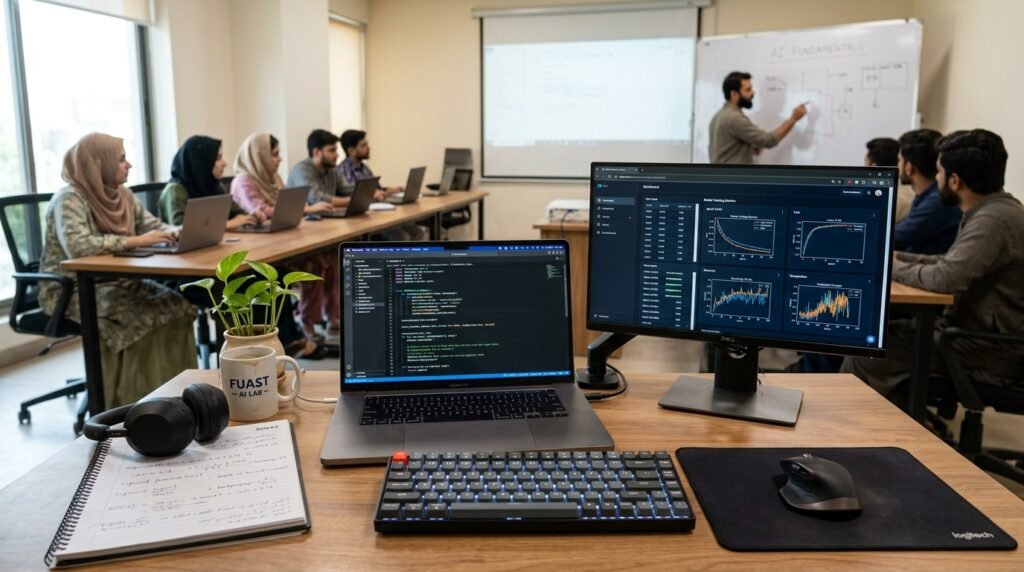
AI is relevant to more degree programmes than most students realize. Business students can use AI tools for research, content and analysis. Engineering students can apply them to data and automation. Arts students can use them for design, content generation and research workflows.
This is not about becoming an AI engineer. It is about understanding how AI tools work, where they apply in your field and how to use them to produce better output. Corvit Sahiwal’s Artificial Intelligence course is built for students from different degree backgrounds who want practical AI training, not deep computer science theory.
Programming and Python
Python is the most versatile starting point for students with no prior coding experience. It applies to data analysis, automation, basic AI, web scraping and calculations. You do not need to become a software developer to benefit from it.
A BBA student who can write a Python script to analyze sales data stands out. A civil engineering student who can automate a reporting task has something to show. Even basic Python, applied to a real problem in your own field, demonstrates more capability than a certificate.
Website Development
Web development is one of the clearest paths from learning to earning. You can build a project, show it to a client and start freelancing while still in your second or third year.
It suits students interested in entrepreneurship, tech startups, digital services or building their own product. A working website is visible proof of a skill in a way a certificate alone is not. Corvit Sahiwal’s Website Development course covers practical skills from the ground up for students with no prior coding background.
Cybersecurity
Cybersecurity is growing in importance across both government and private sectors in Pakistan. Students in engineering, computer science and telecom programmes have the most natural fit, but the fundamentals are accessible to any motivated student.
Understanding network security basics, ethical hacking principles and system vulnerabilities creates a strong and specific specialization. The CEH certification is issued by EC-Council after students pass the exam. Corvit trains students for it; the certification itself comes from EC-Council. Corvit Sahiwal’s Cybersecurity and Ethical Hacking course covers both practical defense skills and ethical hacking fundamentals.
Digital Marketing
Digital marketing is one of the most transferable skills a university student can learn. It applies to almost every industry, works alongside any degree and opens paths in both employment and freelancing.
Students learn how to run paid campaigns on Google and Meta, manage social media, analyze performance data and grow a brand online. Every business, startup and organization in Pakistan actively needs these skills. The Pakistan Software Export Board registers freelancers across Pakistan, and digital marketing is consistently among the top services offered. Starting that path while still in university puts you ahead of most graduates.
Corvit Sahiwal’s Digital Marketing course is one of the most practical local options for students who want to start building this skill with real instruction.
SEO
SEO is a focused subset of digital marketing with strong freelance demand. Businesses need their websites to rank on Google and most cannot do it themselves. A student who learns SEO can offer audits, content optimization and technical fixes to local businesses, e-commerce stores and startups.
It has clear deliverables and measurable results, which makes building a portfolio straightforward. Corvit Sahiwal’s SEO course teaches the skills needed to start producing results for actual clients.
Graphic Design and Video Editing
Visual content drives almost all digital communication now. Social media, marketing materials, brand identity, YouTube channels and educational content all require design and video production skills.
This is a strong choice for students in mass communication, arts or humanities, and for anyone whose career will involve communication. It also works as a freelance skill. Designers and video editors are in consistent demand on Fiverr and Upwork. Corvit Sahiwal’s Graphic Design and Video Editing course teaches practical production skills students can apply right away.
Data Analytics
Data analytics suits students who are already comfortable working with numbers and want to make that comfort professionally visible. The core tools are Excel, SQL, Python and Power BI.
Business, commerce, economics, engineering and science students all have natural connections to data work. It converts existing academic strengths into something an employer can actually see and test during an interview.
Which Tech Skill Should You Choose Based on Your Degree?
The right skill depends on your degree background, your career direction and what you genuinely enjoy. Here is a breakdown by degree that makes the decision more concrete.
BBA and business students benefit most from Digital Marketing, SEO and AI tools. These apply directly to the business functions they will work in and are in high demand across both employment and freelancing.
B.Com and commerce students gain the most from SEO, Digital Marketing and Data Analytics. Financial reporting, business analysis and online visibility are areas where these skills add clear value.
Engineering students have the most direct path into Python, AI, Automation and Data Analytics. These connect to the technical systems and processes they will work on throughout their careers.
Mass communication students benefit from Digital Marketing, SEO and Graphic Design and Video Editing. Content creation, brand communications and social media management are natural extensions of their degree.
Arts and humanities students find the most practical options in Graphic Design, Digital Marketing and SEO. These fields do not require technical prerequisites and produce visible, portfolio-ready work quickly.
BSCS and IT students already have technical foundations. AI, Cybersecurity and Web Development are the most useful additions to go deeper than their standard coursework covers.
Education students can use AI tools, Digital Marketing and content creation skills for online teaching, educational content development and school communications.
A 4-Year Tech Skills Roadmap for University Students
This roadmap is a guide, not a rigid schedule. Start as early as you can. Do not wait until your final year.
Year 1: Explore what is available. Take a short introductory course or work through structured tutorials in two or three areas. The goal is to find what interests you and fits your degree direction. Do not commit to a deep specialization yet. Just start.
Year 2: Pick one skill and take a structured course. A local institute gives you schedule accountability, real instruction and a group of peers working on the same problems. Apply what you learn to small, real tasks immediately. If you are learning SEO, run a basic audit on an actual website. If you are learning design, take on a small project for a friend or local business.
Year 3: Build two or three practical projects using the skill you have developed. These do not need to be paid work. A mock marketing campaign, a working website, a cybersecurity lab report, an AI automation script or a design portfolio all count. Document everything you build.
Year 4: Focus on your portfolio, CV, LinkedIn and internship applications. Use the work from Year 3 as proof of your skills. Internship applications land better when you have a portfolio to show alongside your degree. A student with real project work is in a different position from one who only has transcripts.
Can You Learn IT Skills Without a Computer Science Degree?
Yes. Most practical digital skills that employers and clients value do not require a computer science background.
Digital Marketing, SEO, Graphic Design, Video Editing and AI tools are all accessible to students from any degree background. These areas reward creativity, communication and consistent practice more than coding ability.
Web Development and Python have steeper learning curves and benefit from some technical aptitude, but students from non-CS backgrounds learn them successfully through structured courses every year.
Cybersecurity is more technical and suits students with some existing comfort around networks and systems, but the fundamentals are teachable to motivated students without a CS background.
The determining factor is not your degree. It is whether you put in structured, consistent practice and build real projects that demonstrate actual ability.
Which IT Courses Can University Students Take in Sahiwal?
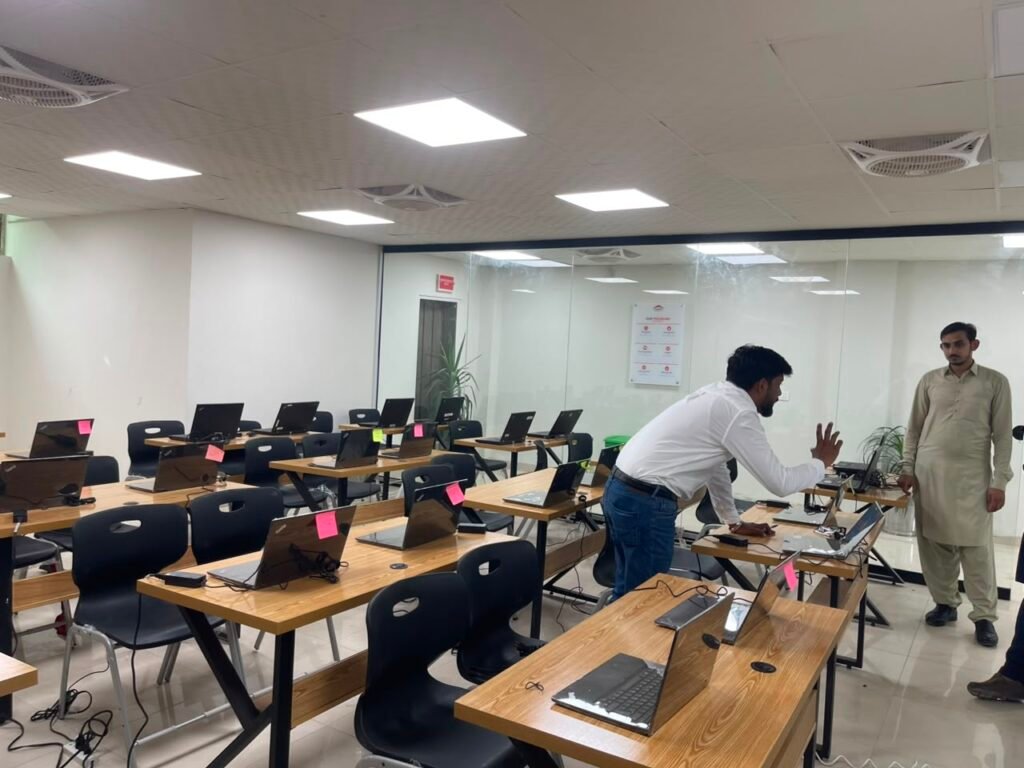
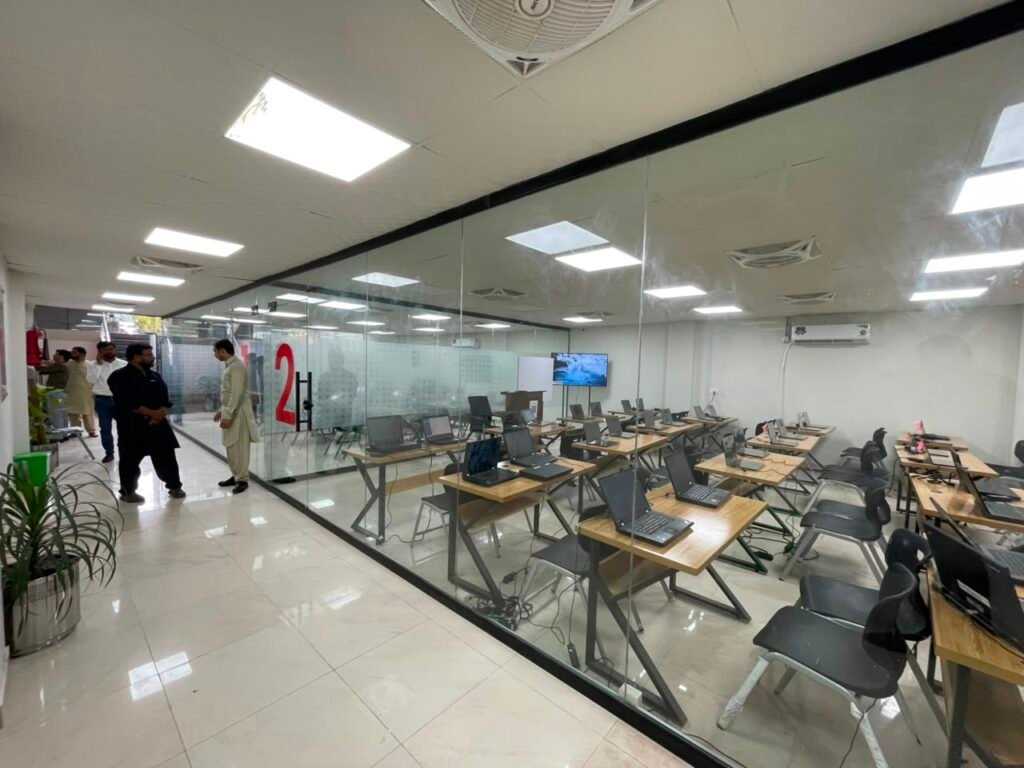
Corvit Sahiwal offers six practical IT training courses at its campus on Muhammad Pur Road, Sahiwal. These are paid courses designed for hands-on instruction and clear skill outcomes.
The current courses are Artificial Intelligence, Cybersecurity and Ethical Hacking (CEH), Website Development, Digital Marketing, SEO and Graphic Design and Video Editing.
Students from COMSATS Sahiwal, University of Sahiwal and other nearby institutions take these courses alongside their degree studies. Batch schedules change between intakes, so confirm timing directly with the campus before enrolling. You can reach Corvit Sahiwal on WhatsApp at +92 3273333431 or browse the full course list on the website.
How to Build a Portfolio While Studying
A portfolio is proof that you can actually do something. A certificate tells an employer you completed a course. A portfolio shows them what you did with it.
For technical skills, GitHub is the standard place to document code, automation scripts and projects. A profile with real commits on real projects tells a hiring manager far more than an empty profile with certifications listed.
For SEO students, run actual audits on real websites and document your findings, recommendations and any results you can track. For digital marketing students, run mock campaigns or help a local business with their social media and record what happened. For design and video students, build a collection of completed pieces across different formats.
Cybersecurity students can work through lab environments and CTF challenges and document their methodology clearly. AI students can build automation workflows or tools that solve a real, specific problem.
The common thread across all of them is documentation. Write down what you did, what problem you were solving and what the result was. That is what a portfolio actually is, regardless of which skill you chose.
What Should You Learn First?
Choose one skill. Not two or three. One.
If you are unsure where to start, Digital Marketing and SEO have the lowest barrier to entry and produce visible results quickly. If you have a technical leaning, Python or Web Development gives you a strong foundation to extend later.
Once you have chosen, learn the fundamentals through a structured course. Then build a project with what you learned. Then build another. Document both and put them somewhere visible.
After six to twelve months of consistent, focused work, you will be in a position to consider adding a complementary skill. A digital marketing student might add SEO. A web developer might explore basic AI. But that comes after, not alongside. Choosing the right IT skills for university students starts with one decision and follows through with real work.
Frequently Asked Questions
What IT skills for university students are most useful in Pakistan?
IT skills for university students with the most consistent demand in Pakistan include Digital Marketing, SEO, Web Development, AI tools, Cybersecurity and Graphic Design. The best choice depends on your degree background and career direction. Choose one area and build it through real projects rather than spreading across multiple skills at once.
Which IT skill is best for university students with no technical background?
Digital Marketing, SEO and Graphic Design and Video Editing are the most accessible for students without prior technical experience. These areas reward communication ability and creative thinking more than programming knowledge. AI tools are also becoming increasingly usable without a technical background.
Can university students learn IT skills without a computer science degree?
Yes. Digital Marketing, SEO, Graphic Design, Video Editing and AI tools are all accessible to students from any degree programme. Web Development and Python have steeper learning curves but are learnable through structured courses. Cybersecurity is the most technical option and suits students with some existing comfort with networks and systems.
Which IT courses are available for university students in Sahiwal?
Corvit Sahiwal currently offers Artificial Intelligence, Cybersecurity and Ethical Hacking (CEH), Website Development, Digital Marketing, SEO and Graphic Design and Video Editing. These are open to university students from any degree background. Confirm current batch schedules directly with the campus before enrolling.
Should I learn AI, cybersecurity, web development or digital marketing?
It depends on your degree and goals. BBA and commerce students benefit most from Digital Marketing, SEO or AI tools. Engineering students gain most from AI, Python or Cybersecurity. Arts and mass communication students are well-suited to Graphic Design, Digital Marketing or SEO. BSCS students can go deeper with Cybersecurity, AI or Web Development.
How can university students build a tech portfolio while studying?
Work on real projects, not just coursework. For technical skills, document your code and scripts on GitHub. For marketing and SEO, run mock campaigns or help a local business and record the results. For design and video, build a collection of completed pieces. Write down what you did, what problem you solved and what the result was. That is your portfolio.
The best time to start building IT skills for university students is during the first or second year, not after graduation. Starting early gives you time to build real projects before you need them.
Get in touch with Corvit Sahiwal to confirm current batch schedules and find out which course fits your degree and career goals.