
Both online and on-campus IT training in Sahiwal can produce job-ready skills. But for most beginners, on-campus, hands-on training is the faster route to actual employment. The reasons are specific and practical, not just preference. This guide gives a fair, structured comparison so you can make the right choice for your situation rather than the most popular one.
What Is the Real Difference Between Online and On-Campus IT Training?
Online training offers flexibility and self-pacing. On-campus training offers structured accountability, live feedback, and hands-on lab practice. These are genuinely different things, and the right one depends on who you are as a learner.
Online training lets you study when it suits you. You can revisit recorded material, work at your own pace, and access global course content from platforms like Coursera, Udemy, or Microsoft Learn. The trade-off is that no one is checking whether you are actually doing the work, and no instructor is catching the mistakes you do not know you are making.
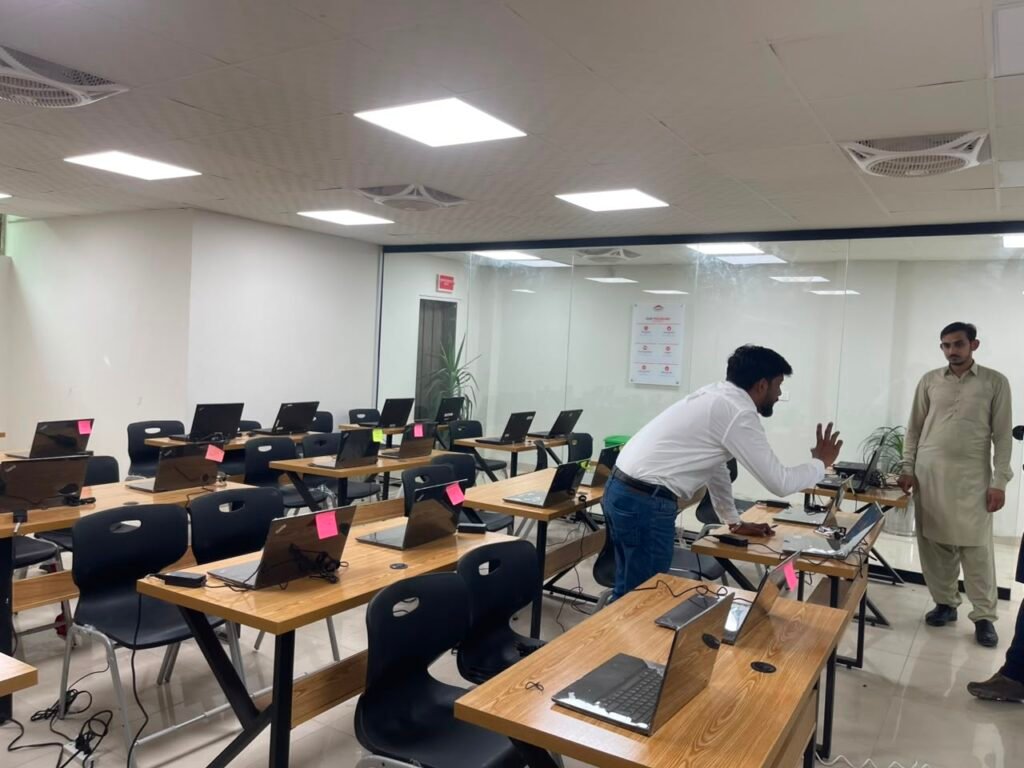
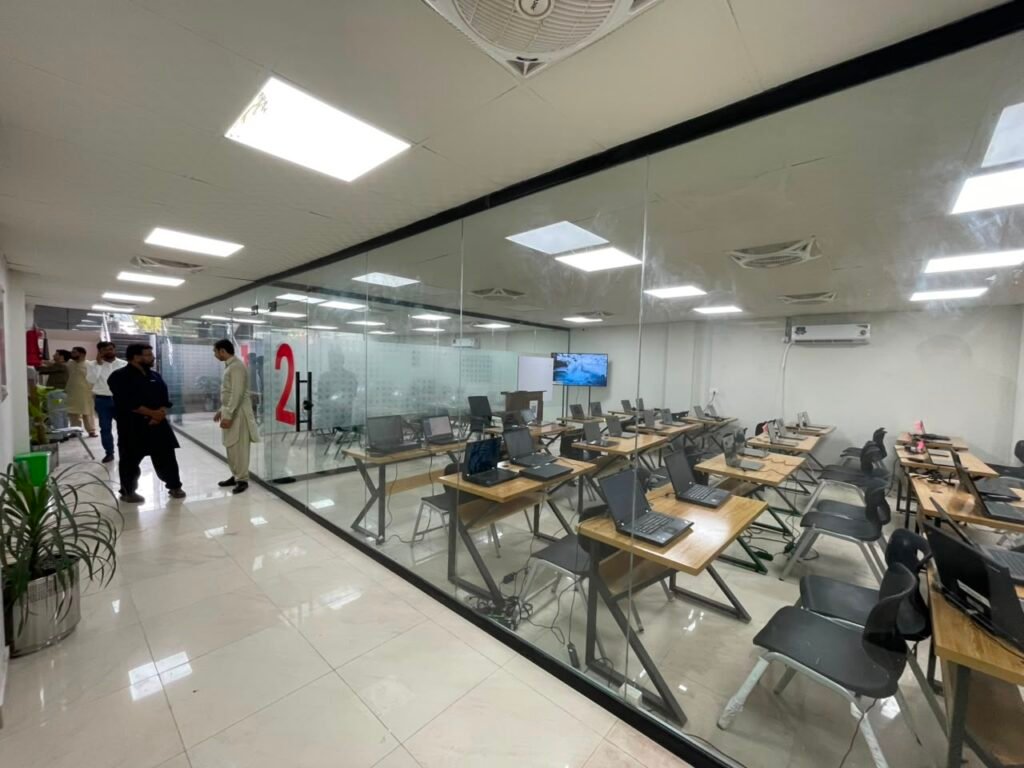
On-campus training runs on a fixed schedule with a real instructor in the room. You get live feedback, structured projects, and the social accountability that comes from learning alongside other students. The trade-off is less flexibility. You show up when the class is scheduled, not when it suits you.
Neither format is universally better. The honest question is which one fits your learning style and your current goals.
Where Online IT Training Wins
Online training genuinely wins on flexibility, cost, and access to global course content. If you are a self-disciplined learner who can set your own schedule and stick to it, online training removes almost every logistical barrier between you and a skill.
Cost is lower on average. Most online platforms offer individual courses far below the price of a structured local course, with free options available on platforms like Microsoft Learn, Google Digital Garage, and Coursera’s audit tracks. For skills like Azure fundamentals or Google Analytics, official free learning paths exist and are genuinely rigorous.
Access to global expertise is another real advantage. An online learner in Sahiwal can study the same curriculum as someone in New York or London, from a recognized institution or a top industry professional, without leaving home.
The honest caveat is significant though. Online training requires far more self-discipline than most beginners expect. Completion rates for self-paced online courses are notoriously low across all demographics. A beginner who has never studied a technical skill independently often underestimates how easy it is to defer progress indefinitely when no one is holding them accountable. Without structured project guidance, online learners also tend to build weaker portfolios, since the course does not push them to finish and document real work.
There is also a quality gap that is easy to miss when browsing online platforms. The range between a well-designed, project-driven online course and a passive, lecture-heavy video collection is enormous, yet both appear under the same “take this course” interface. Choosing the wrong type of online course can waste months without producing anything a client or employer can actually evaluate.
Where On-Campus IT Training Wins
On-campus training wins on accountability, hands-on practice, real-time feedback, and portfolio quality. These are the factors most directly linked to getting hired faster, not theoretical knowledge alone.
Instructor feedback matters most for beginners. Bad habits in code structure, design choices, or marketing campaign setup are easy to build silently when no one is reviewing your work. An instructor who sees your project in real time catches these early. A beginner learning from video tutorials alone often carries the same mistakes forward for months before realizing something is wrong.
Structured lab practice and project work produce a real, documentable portfolio. On-campus courses that require students to complete and present actual projects before passing give graduates something concrete to show employers and clients. This is the single most important factor in getting hired or landing freelance work faster.
Research on this is consistent. A 2026 review of training effectiveness published by Teachfloor found that in-person training retains a clear advantage over online for hands-on skills, even as well-designed online programs match in-person outcomes for knowledge-based learning. Practical IT skills, whether writing code, configuring a network, or running a real ad campaign, fall firmly in the hands-on category.
The peer environment also helps more than most beginners expect. Learning alongside other students who are working through the same challenges creates informal feedback loops, motivation, and a natural sense of accountability that self-paced online learning does not replicate.
Which Format Gets You Hired Faster?
For most beginners, on-campus training with structured hands-on projects produces a stronger portfolio and better interview readiness faster than self-directed online study. This is the honest, direct answer.
The specific reasons are practical. A structured local course forces project completion. It produces a real certificate from a recognized local institute that carries weight in Pakistan’s job market. It builds interview-ready confidence through real feedback rather than self-assessment. And it creates a network of peers and instructors who can refer, recommend, or inform you about opportunities you would not find alone.
There is an honest caveat here too. A self-disciplined learner who completes a rigorous online curriculum, builds real projects, and documents them carefully can absolutely match or exceed these outcomes. Online is not an inherently weaker path. It is a harder path for most beginners to follow consistently without external structure, which is why on-campus wins the “faster” comparison for the majority.
The portfolio question is worth isolating specifically. Getting hired in IT, whether for a local job or a freelance client on Fiverr or Upwork, almost always comes down to what you can show, not what you can say you completed. An on-campus course that requires you to finish and present real work produces that evidence naturally. An online course that only tracks quiz scores and video completion does not. Choosing an online course specifically for its project requirements and peer review components closes this gap significantly, but most self-paced courses are not built that way.
What About Hybrid or Flexible Formats?
Hybrid formats combine online flexibility with some on-campus accountability, and current research suggests this combination often performs best overall. A learner who can access some material online between sessions while still attending regular structured classes gets the best of both sides.
Corvit Sahiwal’s weekend batch format is the closest local equivalent to this kind of flexible, structured option. Saturday and Sunday sessions are built for students who cannot attend daily weekday classes, including working professionals and students with part-time commitments. You still get the real instructor feedback, the structured project work, and the accountability of a fixed schedule, just compressed into weekend sessions instead of daily attendance.
Confirm current batch availability and timing directly, since schedules change between intakes. The class schedule page has current batch details, or you can reach out directly to confirm.
IT Training in Sahiwal: What Is Actually Available Locally?
Corvit Sahiwal offers 6 on-campus courses in Sahiwal, covering AI, Digital Marketing, SEO, Website Development, Graphic Design and Video Editing, and Cybersecurity and Ethical Hacking (CEH). These are all hands-on, practical courses with real project work, built for students who want employment-relevant skills, not just completed course hours.
All six are available through Corvit Sahiwal’s training programme, with both weekday and weekend batch options depending on current availability. For the skills these six courses cover, on-campus training at Corvit Sahiwal is the stronger, more accountable starting point for a beginner in Sahiwal compared to a self-paced online alternative.
For skills not currently offered locally, including cloud computing, DevOps, data analytics, and networking, self-study through platforms like Microsoft Learn or other providers is the realistic option, with the understanding that completing a self-paced online path requires more independent discipline than a structured course.
Networking certification through CCNA is also available through Corvit’s wider national network at other branches, for students specifically interested in that path who are willing to travel or study remotely alongside a structured programme elsewhere.
Frequently Asked Questions
Is online or on-campus IT training better for beginners?
On-campus training is generally better for beginners because of the structured accountability, real instructor feedback, and hands-on project work that produce a stronger portfolio faster. Self-disciplined learners can succeed online, but most beginners underestimate how much external structure helps in the early stages.
Can I get a job after an online IT course in Pakistan?
Yes, online courses from reputable platforms do lead to employment. The key is completing the course fully, building real project work, and obtaining a recognized certificate. Employers in Pakistan increasingly recognize certificates from established platforms, though local employers still tend to value practical, demonstrable skill over the name of the platform.
What IT training is available in Sahiwal?
Corvit Sahiwal offers 6 on-campus courses: Artificial Intelligence, Digital Marketing, SEO, Website Development, Graphic Design and Video Editing, and Cybersecurity and Ethical Hacking (CEH). Government-funded options through NAVTTC and TEVTA also exist separately; Government College of Technology Sahiwal is the local government-affiliated institute.
Does Corvit Sahiwal offer online classes?
Corvit Sahiwal’s current courses are on-campus, with both weekday and weekend batch formats available. Confirm the current format and schedule directly with Corvit Sahiwal, since this can change between intakes.
Which IT skills are best learned on-campus rather than online?
Hands-on technical skills, including cybersecurity lab work, web development, and graphic design using professional tools, benefit most from on-campus training, since real-time instructor feedback catches mistakes that self-paced study misses. Conceptual knowledge, such as cloud computing theory or marketing fundamentals, transfers well online.
How do I choose between online and on-campus IT training?
Be honest about your self-discipline and schedule. If you can commit to a fixed schedule and want faster, more accountable progress toward employment, on-campus training is the stronger choice. If flexibility is the priority and you are genuinely self-directed, a rigorous online program with real project requirements is a realistic path.
Final Thoughts
IT training in Sahiwal is available in both formats, but most beginners get to employment faster through structured, on-campus training with real project work and instructor feedback. Online training wins on flexibility and cost, while on-campus training wins on the factors that directly improve hiring speed. Corvit Sahiwal’s courses cover 6 in-demand skills with hands-on, practical training and flexible batch options. Get in touch with Corvit Sahiwal to find out which course and schedule fit your situation.