A BSCS degree can teach you programming, databases, algorithms, networks, software engineering, and how computers work.
But when you apply for your first internship or junior job, you will usually need more than course names on your transcript.
Can you use Git properly?
Have you built a complete project?
Can you work with an API?
Are you comfortable using Linux?
Can you debug code when there is no solution written at the back of an assignment?
These are the kinds of questions that make IT skills for BSCS students important.
This does not mean your university degree is not useful. In fact, Pakistan’s Higher Education Commission has moved in the same direction. HEC’s revised Computer Science curriculum now puts more emphasis on practical integration, internships, final-year projects, professional certifications, and industry-relevant skills. You can read the HEC update on the revised Computer Science curriculum for the current framework.
The degree gives you the foundation. What you do with that foundation during four years can make a big difference when graduation arrives.
Here are some of the most useful practical skills BSCS students in Pakistan should start building alongside university.
Why BSCS Students Need Skills Beyond University Coursework
A BSCS program already covers a lot.
You may study programming, object-oriented programming, databases, operating systems, computer networks, artificial intelligence, software engineering, data structures, algorithms, and other important subjects.
The problem is usually not that these subjects are missing.
The difference comes from how much you practise them outside assignments and exams.
You may study databases for one semester, but have you designed a database for your own application?
You may learn programming in class, but have you built something without following the exact steps given by an instructor?
You may complete a web technology subject, but can you take a project from an empty folder to a working website?
That is where practical IT skills for students become important.
HEC’s latest BS Computer Science framework reflects this too. It includes mandatory field experience, a final-year project, and an industry-relevant certification component. The direction is clearly towards graduates who can demonstrate applied ability, not only pass theory courses.
So, instead of asking what your degree is “missing,” ask a better question:
Which skills should I practise deeply enough that I can actually show them to an employer?
1. Programming and Problem Solving
Programming should be more than passing your programming courses.
A BSCS student should eventually become comfortable taking a problem, breaking it into smaller parts, writing code, testing it, and fixing what goes wrong.
You do not need to learn every programming language.
It is usually better to become comfortable with one or two.
Python is useful if you are interested in AI, automation, scripting, or data.
JavaScript matters if you want to build web applications.
Languages such as Java, C++, and C# can also be useful depending on your university work and career direction.
The language is only part of it.
Problem solving matters more.
Try building small programs without copying a full tutorial. Work through coding problems. Read other people’s code. Go back to old projects and improve them.
When your code fails, spend time understanding why.
That debugging process is part of becoming a developer.
2. Git and GitHub
Git is one of those skills students often hear about but delay learning.
Do not wait until your final year.
Git helps you track changes in your code. It also allows several people to work on the same project without constantly sending folders to each other.
GitHub gives you a place to store and share repositories.
At minimum, learn how to create a repository, commit changes, work with branches, pull changes, push code, resolve simple conflicts, and write a useful README.
Then start using Git on your university projects.
Do not learn it once and forget it.
If you use Git throughout your degree, it becomes normal by the time you enter an internship.
Your GitHub profile can also become part of your portfolio, especially if you are applying for development roles.
3. SQL and Database Management
Most useful applications need data.
That makes SQL one of the most useful technical skills for BSCS students.
Do not stop after learning how to write a SELECT query for an exam.
Practise creating databases.
Learn relationships between tables.
Understand primary and foreign keys.
Work with joins.
Learn how to insert, update, delete, filter, and aggregate data.
Then connect a database to an actual application.
For example, build a small inventory system, student portal, booking system, or task manager.
You will understand databases much better when real application data starts going wrong.
It is also useful to understand the basics of both relational and non-relational databases. You do not need to master every database product. Start with something such as MySQL or PostgreSQL and build from there.
4. Web Development
Even if you do not plan to become a full-time web developer, understanding the web is useful for a computer science student.
Start with HTML and CSS.
Then learn JavaScript properly.
After that, you can move towards frontend frameworks, backend development, databases, APIs, authentication, and deployment.
The important thing is to build complete projects.
Do not spend six months watching videos about React without finishing an application.
Build something small first.
A portfolio website is fine.
A booking application is better.
A simple management system with login, database storage, and user roles will teach you even more.
Students in Sahiwal who want structured practice can also look at the Website Development course at Corvit Sahiwal. The current training focuses on practical development and project work rather than theory alone.
A course should support your BSCS degree, not replace it.
Use it to get more practice in areas where you feel your classroom work is not enough.
5. APIs and Backend Basics
You will eventually reach a point where one application needs to communicate with another.
That is where APIs become important.
Learn what an API is.
Understand HTTP methods such as GET, POST, PUT, PATCH, and DELETE.
Learn how requests and responses work.
Get comfortable with JSON.
Understand status codes.
Then practise using a public API in a project.
After that, try building a simple API yourself.
If you want to become a developer, learn how authentication works too. Understand sessions, tokens, permissions, and why you should never blindly trust data coming from a user.
These skills connect many things you learn during BSCS.
Programming, databases, networking, web development, and security all start coming together.
6. Linux and the Command Line
A lot of students spend their entire degree inside Windows applications and graphical interfaces.
That can become limiting later.
Linux is widely used in servers, cloud systems, cybersecurity, development environments, and DevOps.
You do not need to become a Linux administrator immediately.
Start with the basics.
Learn how to navigate directories from the terminal.
Create and move files.
Understand permissions.
Install packages.
Run processes.
Work with environment variables.
Learn a few useful shell commands.
Then try using Linux for an actual project.
You can install it in a virtual machine if you do not want to replace your main operating system.
For students interested in cybersecurity, cloud computing, backend development, or DevOps, Linux becomes even more important.
7. Cloud Computing
A university project running on your laptop is useful for learning.
The next step is learning how an application actually gets online.
That is where cloud computing starts becoming relevant.
You should understand basic ideas such as servers, virtual machines, storage, databases, networking, domains, deployment, scaling, and permissions.
You do not need to learn AWS, Azure, and Google Cloud at the same time.
Choose one platform.
Learn the basics.
Deploy a small application.
Then understand what happens between pushing your code and a user opening that application in a browser.
HEC’s revised Computer Science framework includes Network Infrastructure and Cloud Computing among its computing specialization areas.
For BSCS students in Sahiwal, cloud is currently better treated as an additional learning path rather than assuming every local short course covers it. Corvit Sahiwal’s current on-campus focus is AI, cybersecurity, web development, digital marketing, SEO, and graphic design and video editing. Their guide on IT training in Sahiwal also points students towards self-study or other providers for areas such as cloud computing and DevOps when local training is not currently available.
8. Cybersecurity Fundamentals
You do not need to become a cybersecurity specialist to understand basic security.
Every developer should know how careless code can create problems.
Learn about strong authentication.
Understand permissions.
Learn why passwords should not be stored as plain text.
Understand common web vulnerabilities.
Learn basic network security.
Get familiar with concepts such as encryption, phishing, malware, vulnerabilities, and secure coding.
If cybersecurity interests you as a career, you can go deeper into networking, Linux, security tools, penetration testing, SOC operations, and defensive security.
Corvit Sahiwal currently offers a Cybersecurity and Ethical Hacking course in Sahiwal with networking, security fundamentals, ethical hacking, and practical lab work.
For a BSCS student, cybersecurity knowledge can also improve the software you build even if you eventually become a developer rather than a security professional.
9. Artificial Intelligence and Generative AI
Computer science students in 2026 should understand AI beyond simply knowing how to use ChatGPT.
Start with the practical side.
Learn what large language models can and cannot do.
Understand prompting.
Learn how to work with AI APIs.
Explore automation.
Try connecting AI to your own application.
You should also understand the limitations.
AI-generated code can contain bugs.
It can introduce security problems.
It can confidently give you a wrong answer.
If you use AI to complete every assignment without understanding the code, you may finish university with weaker skills, not stronger ones.
Use AI as a tool.
Ask it to explain code.
Use it to compare approaches.
Let it help you debug.
But make sure you can still explain what your own application is doing.
Students who want more structured exposure can explore the Artificial Intelligence course at Corvit Sahiwal. Its current focus includes AI tools, automation, agentic workflows, and practical projects.
AI becomes much more useful when you combine it with another skill.
A developer who understands AI can build AI-powered applications.
A cybersecurity student can study AI-related security issues.
A marketer can automate parts of research and analysis.
The combination is usually stronger than treating “AI” as one isolated tool.
10. Software Testing and Debugging
Writing code is only half the job.
You also need to find out why it does not work.
Students often test only the happy path.
They enter the exact input their program expects and stop when the output looks correct.
Real users do not behave like that.
They enter incorrect information.
They refresh pages.
They lose internet access.
They click buttons twice.
They leave fields empty.
Your software should handle those situations.
Learn basic testing concepts.
Understand unit testing and integration testing.
Learn how to use debugging tools in your IDE.
Read error messages properly.
Use logs.
Test edge cases.
You do not need to become a QA engineer, but being able to test your own work makes you a much better developer.
Do Not Ignore Communication and Professional Skills
Technical ability matters, but you also have to explain your work.
This becomes obvious during internships and group projects.
Can you explain a technical problem without making it more complicated?
Can you ask a clear question when you are stuck?
Can you write documentation that another developer can follow?
Can you present your project to someone who is not technical?
These skills matter in almost every IT job.
Good English communication is useful because much of the technical documentation you will read is in English. International clients and remote teams may also expect you to communicate clearly in writing.
You do not need perfect grammar or an accent.
You need clarity.
Start by writing better README files.
Document your projects.
Explain your FYP properly.
Practise presenting what you built and why you made certain decisions.
That is much more useful than memorising complicated technical words.
Build Projects That Are Bigger Than University Assignments
One of the best things a BSCS student can do is build projects without waiting for an instructor to assign them.
Start small.
Then slowly make the projects more complete.
For example, instead of building another calculator, build a small attendance system.
Instead of creating a static website, add authentication and a database.
Instead of only calling an AI tool, connect an AI API to your own application.
Instead of writing SQL queries separately, use a database inside a working system.
A good project forces several skills to work together.
That is exactly what happens in real development.
Your projects can also become part of your CV, LinkedIn profile, GitHub, and portfolio.
When someone asks what you can do, you have something better than a list of technologies.
You can show them.
Which IT Skills Should BSCS Students Learn First?
Do not try to learn all ten skills in one semester.
Your priorities should depend on where you want to go.
If you want to become a software developer, start with programming, Git, SQL, APIs, and debugging.
If web development interests you, focus on HTML, CSS, JavaScript, Git, databases, APIs, and deployment.
If you want to move into AI, strengthen Python first. Then work on SQL, data handling, AI fundamentals, APIs, and practical AI projects.
For cybersecurity, networking and Linux should come before advanced hacking tools.
For cloud or DevOps, start with Linux, Git, networking, scripting, and one cloud platform.
The key is to build skills that connect.
Randomly collecting courses will not help as much as having a clear direction.
A Practical BSCS Skill Roadmap From First to Final Year
You have four years.
Use them.
First Year: Get Comfortable With Programming
Your first goal should be learning how to think through programming problems.
Do not worry about becoming a full-stack developer immediately.
Practise whatever programming language your university is teaching. At the same time, start using Git and GitHub.
Build small programs that are not part of your assignments.
Get comfortable making mistakes.
Second Year: Start Building Complete Projects
By this point, you will usually have more programming knowledge.
Start working with SQL.
Learn basic web development.
Build projects that store real data.
Learn how APIs work.
Put your work on GitHub.
This is also a good time to start noticing which area of computer science you enjoy most.
Third Year: Choose a Direction
You do not need to specialise permanently, but you should start going deeper somewhere.
It could be web development.
It could be AI.
It could be cybersecurity.
It could be cloud computing.
Once you choose, stop spending all your time on beginner-level tutorials.
Build harder projects.
Look for certifications that actually support your chosen path.
Start applying for internships too.
Final Year: Turn Your Work Into a Professional Profile
Your final year should not begin with an empty GitHub profile.
By now, you should be organising your strongest work.
Take your FYP seriously.
Try solving a real problem instead of building something only because it looks easy to complete.
Complete an internship where possible.
Improve your CV.
Fix your LinkedIn profile.
Document your best projects.
Start preparing for technical interviews before graduation, not three months after it.
HEC’s current BSCS framework makes field experience, the final-year project, and industry-relevant certifications formal parts of the revised degree structure. Use those requirements as opportunities to build evidence of your ability rather than treating them as boxes to tick.
Should BSCS Students Learn Freelancing?
Freelancing is an option, not a required career path.
It can be useful because it exposes you to real clients, deadlines, requirements, revisions, and communication.
But do not create a Fiverr profile before you have a service you can actually deliver.
First build the skill.
Then build examples.
After that, look for small projects.
Web development, SEO, design, digital marketing, and other digital services can all be sold independently. But freelancing itself is not a technical skill.
You still need to be good at something first.
If you want to understand the different practical training options available locally, Corvit Sahiwal’s guide to the best IT courses in Sahiwal compares AI, web development, cybersecurity, SEO, digital marketing, and graphic design based on the type of work each involves.
How BSCS Students in Sahiwal Can Build Practical Skills
If you are studying BSCS in Sahiwal, your university should remain the foundation of your education.
Use additional training where you need more practice.
You may already understand programming theory but want more web development projects.
You may have studied AI concepts but want to work with current AI tools.
You may be interested in cybersecurity but need more lab practice.
This is where focused IT training for university students in Sahiwal can be useful.
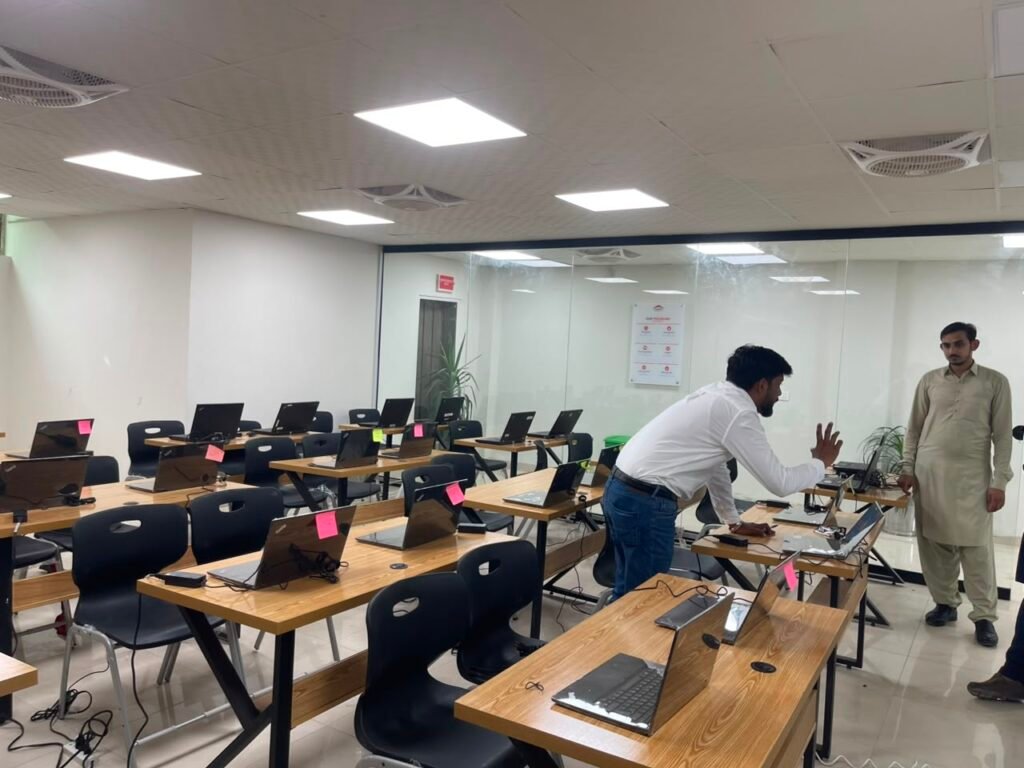
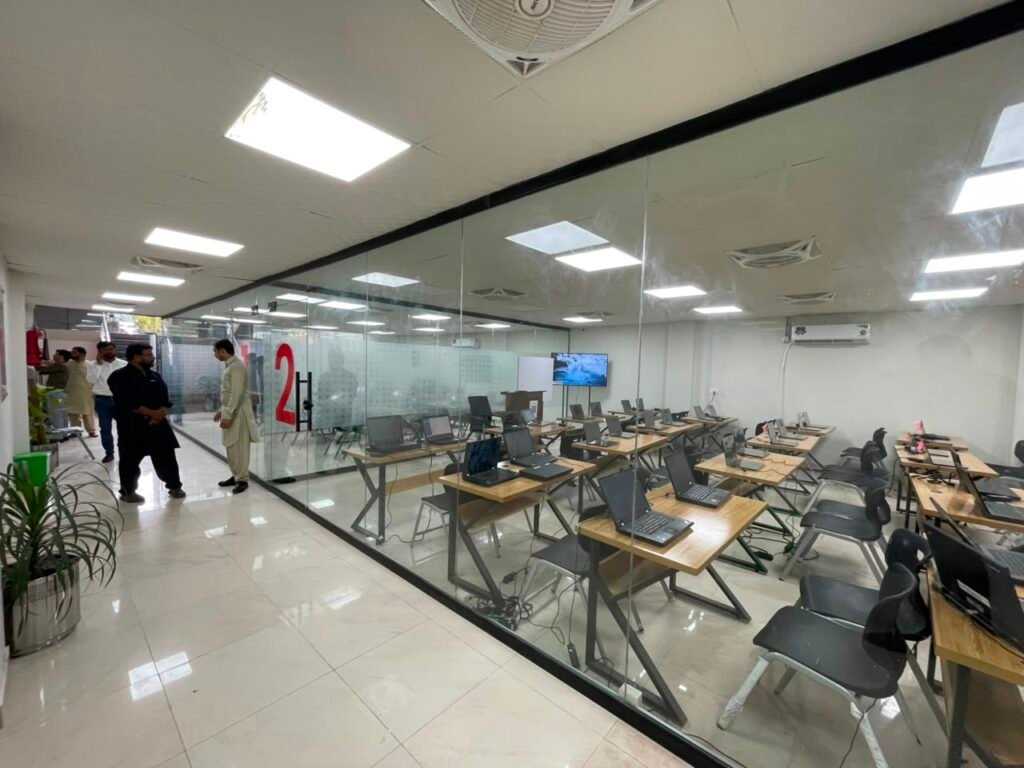
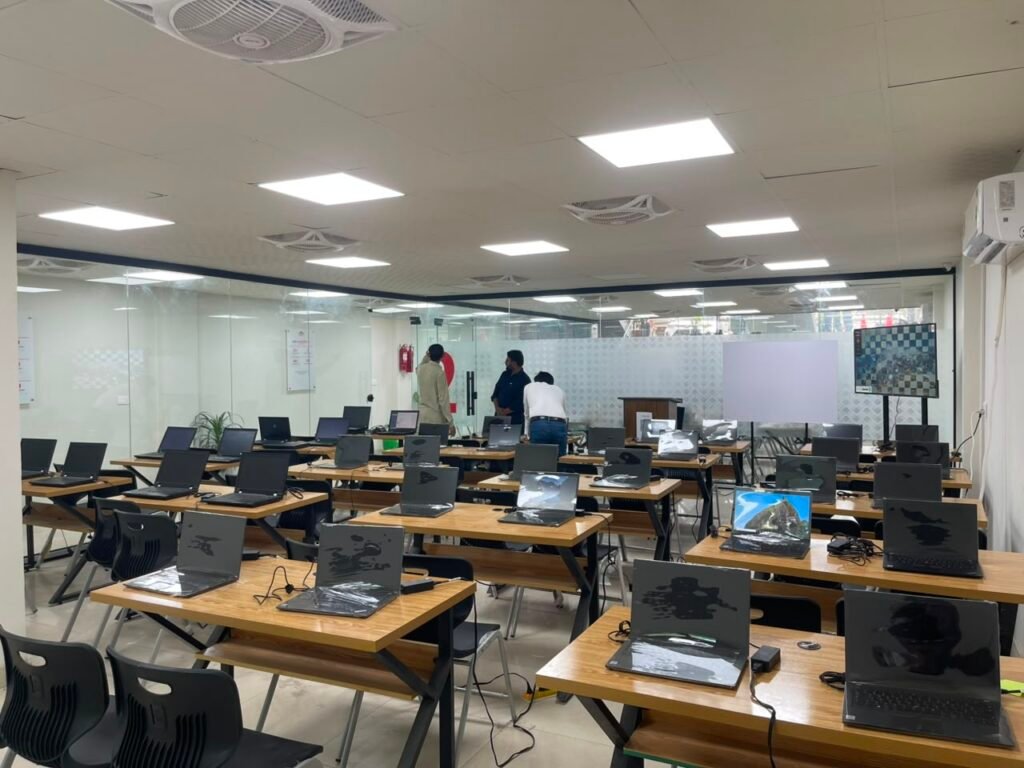
Corvit Sahiwal currently offers on-campus training in Artificial Intelligence, Website Development, Cybersecurity and Ethical Hacking, SEO, Digital Marketing, and Graphic Design and Video Editing. You can see the current options on the Corvit Sahiwal training page.
There is also a dedicated Corvit guide on IT courses for university students in Sahiwal if you are trying to choose a practical skill alongside your degree.
You do not need another course simply for the sake of another certificate.
Choose training when it fills a practical gap.
Certifications Can Help, but Do Not Collect Them Randomly
Certifications can strengthen your profile when they match the career you want.
A cybersecurity student may benefit from security or networking certifications.
A cloud student may eventually pursue AWS, Azure, or Google Cloud certifications.
A developer may find that a strong portfolio matters more than collecting several beginner certificates.
Choose based on the job you want.
HEC has also introduced a professional certification component into its revised BS Computer Science curriculum. The idea is to strengthen the connection between academic study and skills that are recognised by industry.
That does not mean you should collect ten certificates.
One useful certification with genuine skills behind it is better than a folder full of certificates you cannot defend in an interview.
What Skills Should a BSCS Student Learn Besides University Subjects?
A BSCS student should build practical skills that complement university study. These include programming, Git and GitHub, SQL, web development, APIs, Linux, cloud computing, cybersecurity fundamentals, AI tools, testing, and debugging.
Communication matters too.
The exact combination depends on your career path.
A future web developer needs a different skill mix from someone planning to work in cybersecurity.
Start with a strong foundation. Then specialise.
Common Mistakes BSCS Students Should Avoid
Do not spend four years waiting for your university to tell you exactly what to learn.
At the same time, do not ignore your university subjects because you are busy watching online courses.
You need both.
Another mistake is jumping between technologies every few weeks. One month it is Python. Then React. Then cybersecurity. Then AI. Nothing gets enough time to become a real skill.
Tutorial copying is another problem.
If you cannot rebuild or modify a project without the video open beside you, you probably do not understand it yet.
Do not wait until your eighth semester to think about internships either.
Start looking earlier.
Even a small internship can show you how different professional development feels from completing assignments alone.
Frequently Asked Questions About IT Skills for BSCS Students
What are the best IT skills for BSCS students?
The best IT skills for BSCS students include programming, Git and GitHub, SQL, APIs, web development, Linux, cloud basics, cybersecurity, AI, testing, and debugging. Students should choose which skills to take deeper based on the career they want.
Should BSCS students learn web development?
Web development is useful for students interested in software or web careers. It also gives students an easy way to practise programming, databases, APIs, authentication, deployment, and other concepts through complete projects.
Should a BSCS student learn AI?
BSCS students should understand AI and how modern AI tools are used. Students who want an AI career should go further by learning Python, data handling, mathematics, machine learning concepts, APIs, and practical AI development.
Is GitHub important for BSCS students?
Yes. GitHub can help students practise version control and keep their projects organised. A well-maintained GitHub profile can also give employers or internship recruiters examples of the student’s work.
Can I take an IT course while doing BSCS?
Yes. A focused course can help you get more practical experience in a specific area. It should complement your BSCS degree rather than distract you from it. Choose one that matches the skill you actually want to develop.
Build Skills Before Graduation
Your BSCS degree gives you time.
Four years is enough to do much more than attend classes and prepare for exams.
Learn Git before you need it.
Build projects before your FYP.
Apply for internships before graduation.
Start using Linux before a job requires it.
Learn how APIs and databases work together.
Explore AI without letting it do all your thinking for you.
Most importantly, build things you can explain.
That is how academic knowledge starts turning into professional ability.
If you are studying in Sahiwal and want structured practice alongside your degree, explore the current IT courses at Corvit Sahiwal and choose the area that matches your career direction.
Your BSCS should remain the foundation.
Use practical training, projects, internships, certifications, and self-study to make that foundation stronger.